
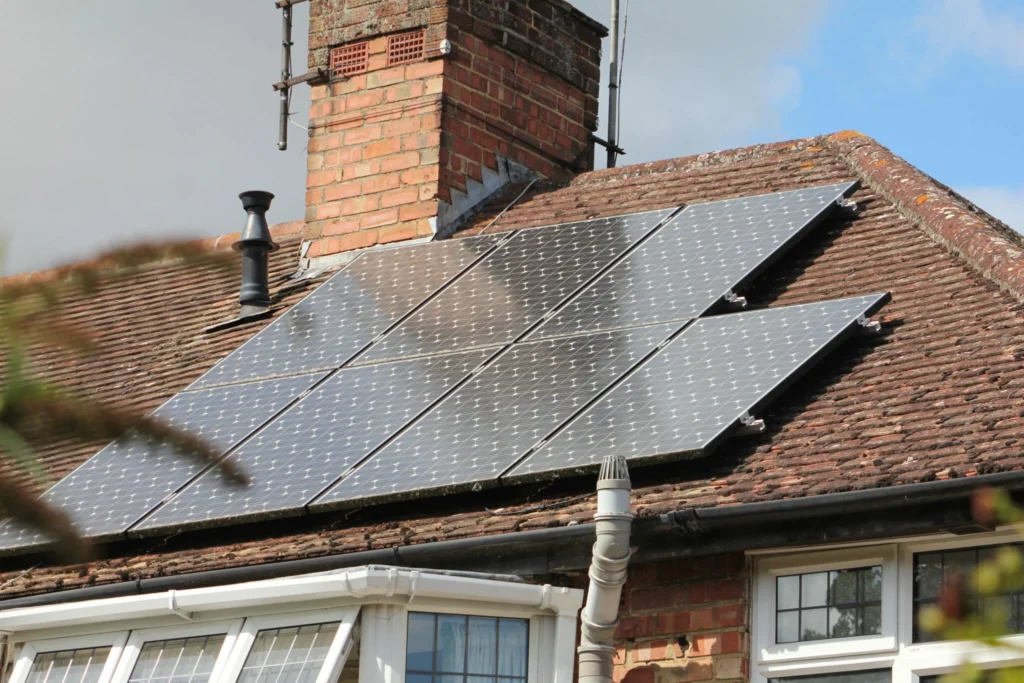
Is there really such a thing as free solar panels?
We explore the truth behind the offers.
Author
 Christian Guthier
Publication date 21 October 2025
With energy prices still high and solar panels becoming more common, many households are wondering whether they can get solar installed for free – or are those online offers too good to be true?
Can you get solar panels for free as the adverts suggest?
The short answer is: sometimes. But only if you qualify.
There are a few genuine government-backed schemes that support households on low incomes or certain benefits. But there are also plenty of misleading claims and marketing tactics to watch out for.
Here’s how the legitimate grants work – and what to look out for before signing anything.
What funding is available right now?
Warm Homes: Local Grant (England)
The landscape has shifted. ECO4 — the previous main scheme — has now ended. But support hasn’t disappeared. The government’s new Warm Homes Plan, launched in early 2026, brings £15 billion aimed at upgrading the UK’s ageing housing stock, with a particular focus on removing the financial barriers that stopped people acting before.
In practical terms, that means:
- Low-income households can access fully funded upgrades — including, in some cases, solar panels — through expanded grant support
- Other homeowners can access low- and zero-interest loans to help cover the cost of improvements
- Solar panels and battery storage are now explicitly treated as viable starting points, not afterthoughts — partly because they can be installed with less disruption and often have a shorter payback period
The Warm Homes: Local Grant also continues, offering free or discounted energy upgrades for owner-occupiers or private renters earning under £36,000 a year, with homes typically needing an EPC rating of D or below. This runs until 2028.
And across the UK, solar panels and batteries remain at 0% VAT until March 2027, which reduces costs for anyone paying privately.
For a fuller picture of what the Warm Homes Plan means for you, read our plain-English guide here.
What to watch out for
Even when described as “free solar”, funding always depends on meeting the eligibility criteria – income, benefits, and property efficiency ratings all matter.
A few key points to keep in mind:
- Check who you’re dealing with. Genuine schemes are listed on gov.uk. If you’re contacted unexpectedly by phone, email, or door-to-door, it’s safest to ignore or report it.
- Be clear about ownership. In real grant schemes, you own the panels once installed – there’s no lease, no repayments. Always read the small print.
- Confirm eligibility. A household may qualify only if the property’s EPC rating is low enough, even if the occupants receive benefits.
- Mind the deadlines. Warm Homes: Local Grant runs until 2028.
- Renting? Tenants can apply only with the landlord’s consent.
- Local flexibility. In Oxfordshire, councils such as Oxford City and South Oxfordshire published Flexible Eligibility routes under ECO4 that allow households without benefits to qualify for help, if they meet income, EPC rating or health-vulnerability criteria.
Be wary of claims that sound too good to be true, such as “free solar for everyone”, “limited-time government offer”… These are rarely genuine. Always check the scheme name and source before sharing your details.
How to find trustworthy advice
If you’re in Oxfordshire, Better Housing Better Health’s free phone line is a great place to start if you want to explore your personal eligibility for any funding towards solar and other energy efficiency measures. Call them on 0800 107 0044 or complete the form on their website.
You can also speak to Cosy Homes Oxfordshire for independent advice on home energy upgrades, or check with your local council’s energy-efficiency team for support under ECO4 Flex or the Warm Homes scheme. Oxfordshire County Council have this useful webpage with details of all current support.
For verified information on current grants and schemes, visit:
In summary
Free solar can be real – but only through official, means-tested government schemes. If you’re not sure whether you qualify, always start with verified sources rather than unsolicited offers – including avoiding adverts on social media.
Solar remains one of the best ways to cut energy bills and carbon emissions, and with genuine support available for low-income households, it’s worth checking your eligibility carefully.
Once you’ve confirmed whether you qualify for a grant or plan to pay privately, the next step is choosing the right installer.
Ready to take the next step? Read our guide on how to chosse a good solar installer
Got free solar on your roof thanks to a verified scheme?
We’d love to hear from you!
Hearing from others who have installed solar can be really helpful for those considering it.
If you’d like to join the growing number of Oxfordshire residents sharing their experience of installing and living with solar panels (and other measures), whether that be through a case study, an open homes event or another way, please do get in touch.