
Inside our grid battery project
Author
 Christian Guthier
Publication date 31 March 2026
Let’s look at what is actually being built at Ray Valley Solar Park, how the battery works, what equipment is being installed, and why those engineering choices matter.
Grid-scale battery storage can sound abstract. Terms like megawatts, containers, and grid balancing don’t immediately show what’s actually being installed on the ground.
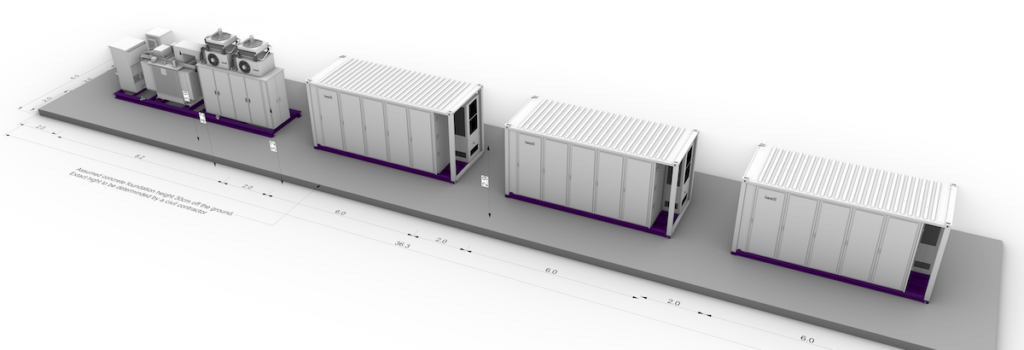
This post explains what the Ray Valley Solar Park battery system physically consists of and how it operates. We’ve included supplier drawings and the technical specification download so you can see the project in more detail.
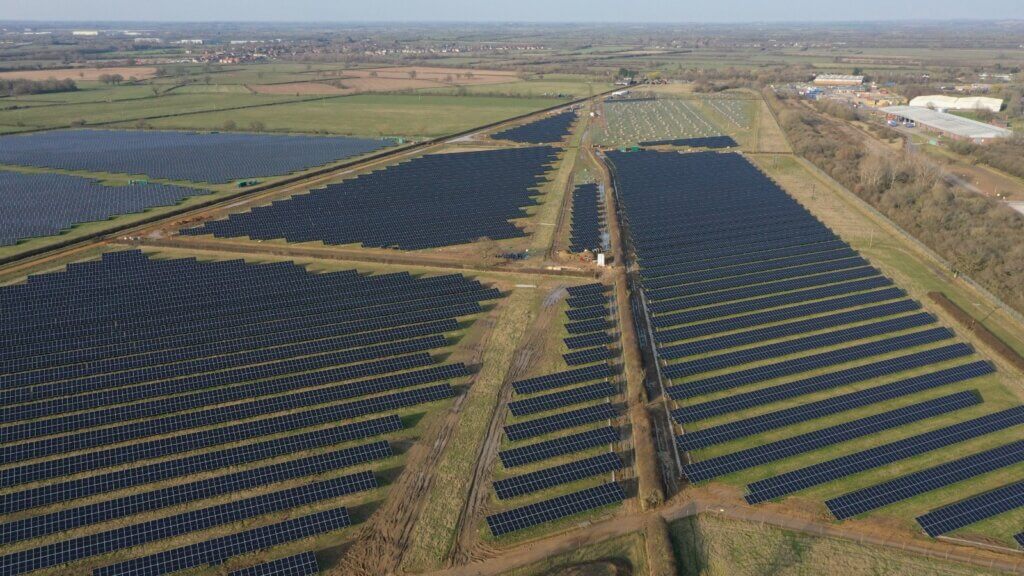
From solar panels to stored energy
The idea behind the project is simple. When solar generation is high, not all that electricity is needed straight away. A battery allows some of that energy to be stored and used later, when demand rises.
But the system that makes this possible isn’t a single unit. It’s more like a small piece of power infrastructure.
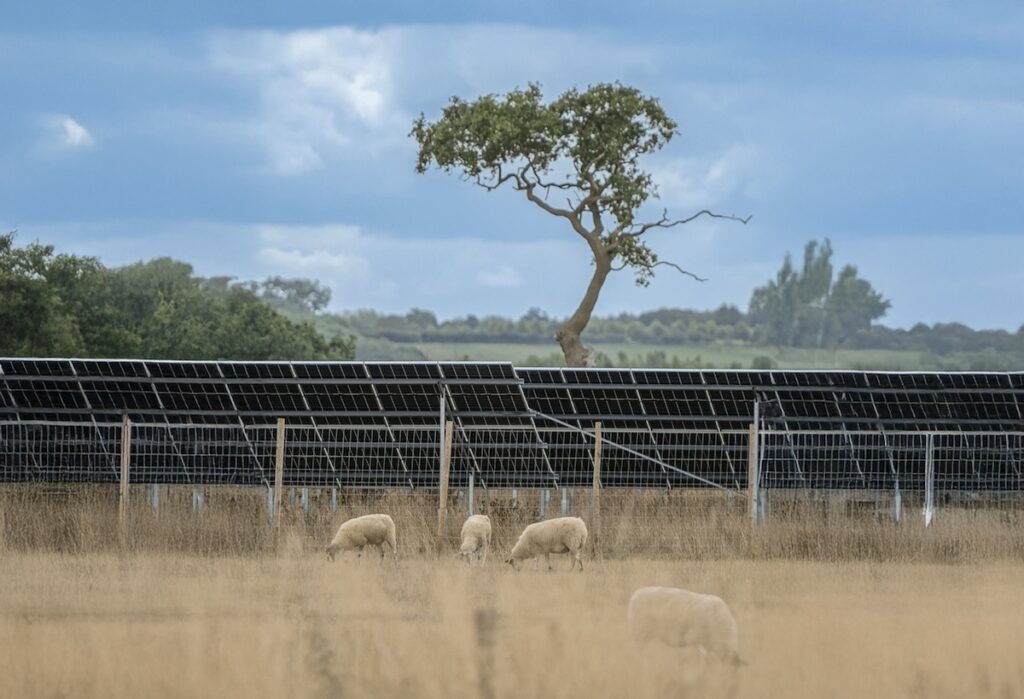
The layout drawings show a series of battery containers sitting alongside the existing solar site, together with the equipment that connects them to the grid. Each container is roughly the size of a shipping container, housing rows of battery modules, monitoring systems, cooling equipment, and safety controls.
What looks simple from the outside is actually a layered system inside: cells grouped into modules, modules into racks, and racks into containers, all connected to a central inverter, often called a Power Conversion System (PCS), that turns stored DC electricity into usable AC power for the grid.
This containerised approach is now standard across Europe because it makes systems easier to transport, install, and maintain.
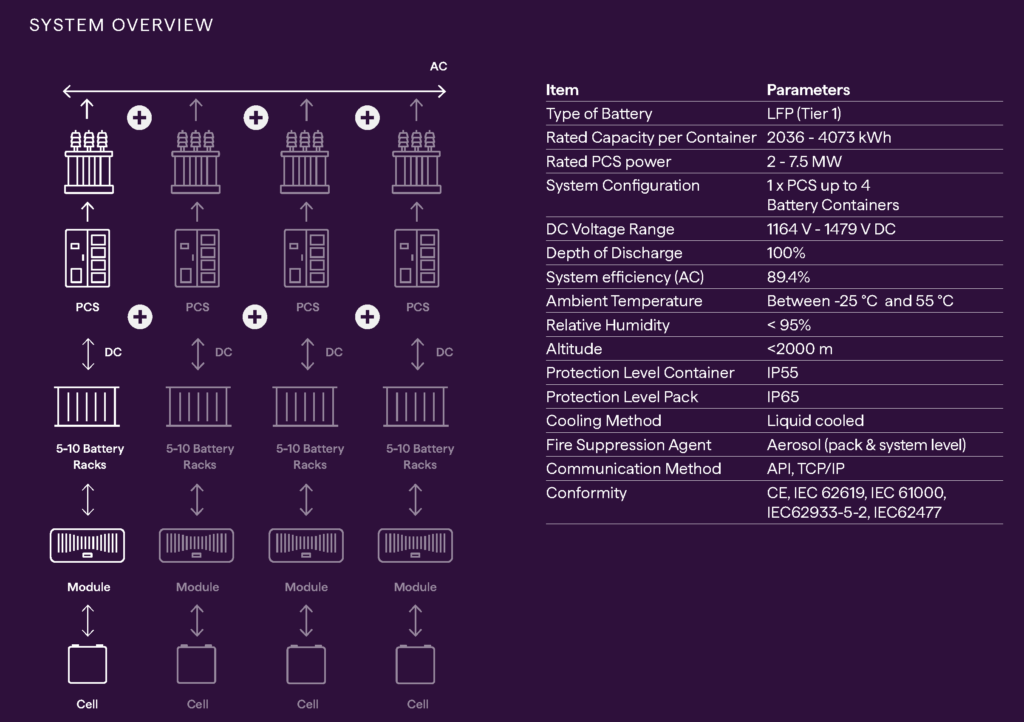
What the system can deliver
The proposed installation would be capable of delivering around three megawatts (3MW) of power, with about twelve megawatt-hours (12MWh) of storage.
Those two numbers describe different things. Megawatts tell you how much electricity the battery can deliver at any one moment, while megawatt-hours show how much energy it can store in total.
In practical terms, this means the system can deliver up to 3MW of power for roughly four hours – which together adds up to around 12MWh of stored energy. That’s enough electricity, at peak output, to meet the typical demand of a few thousand homes during that period.
That duration matters. It means the battery can store surplus solar generation in the afternoon, when production is high, and release it into the early evening, when demand rises and solar output falls.
Systems of this size are becoming standard for solar-paired storage. They’re large enough to make a meaningful contribution to grid balancing, but compact enough to integrate alongside existing generation infrastructure.
Why this type of battery is used
The system uses lithium iron phosphate cells, often shortened to LFP.
These batteries aren’t chosen because they’re cutting-edge. They’re chosen because they’re dependable. LFP chemistry is widely used in grid storage because it offers long operational life, good thermal stability, and predictable performance over many cycles.
For infrastructure that’s expected to run for years, reliability matters more than squeezing out a little extra energy density.
Keeping the system stable over time
One of the key design choices is the use of liquid cooling rather than simple air cooling.
Instead of relying on fans, coolant circulates through the battery packs to keep temperatures stable. That matters because temperature swings are one of the main factors that affect battery lifespan and performance.
The containers also include fire suppression systems, environmental protection, and continuous remote monitoring. These aren’t flashy features, but they are the kind of engineering detail that determines whether an asset performs steadily over the long term.
This isn’t experimental technology
Grid batteries sometimes sound new, but systems of this type are already widely deployed.
The supplier we’re working with has more than three hundred similar installations operating in the field, and the equipment comes with a ten-year warranty backed by continuous monitoring and support.
That doesn’t remove all risk – no infrastructure project is risk-free – but it does mean the technology itself is proven and already operating in real grid conditions.
How the battery fits into the wider energy system
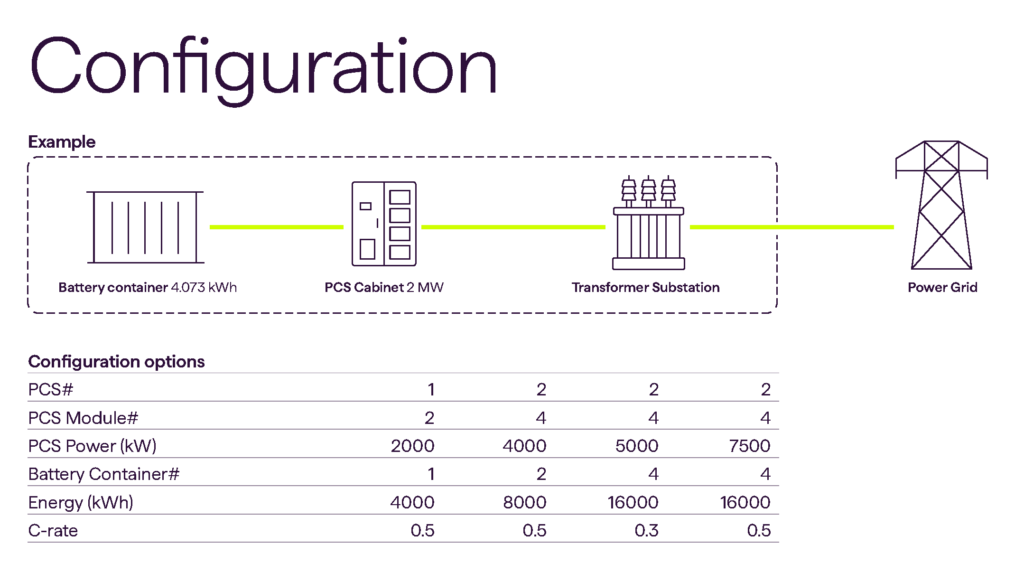
At a technical level, the system works in three stages:
- Electricity flows into the battery containers as DC power.
- Inverters convert it to AC electricity.
- A transformer connects the system to the local network.
This allows the battery to store excess renewable energy, release power when demand rises, and provide balancing services that help stabilise the grid.
Those grid services are what give batteries their economic role, as well as their environmental one.
Reducing pressure on the grid
The UK electricity network is undergoing major upgrades to accommodate growing renewable generation and rising demand through the electrification of heat and transport. National Grid estimates that tens of billions of pounds will need to be invested in reinforcing and expanding the system over the coming years.
Large infrastructure upgrades can involve new substations, overhead lines and cable routes, with associated cost and disruption.
Distributed battery storage helps reduce some of that pressure. By storing electricity locally and releasing it when the network has capacity, batteries can smooth peaks in both generation and demand. That reduces strain on cables and substations and can delay or reduce the scale of reinforcement works required.
One battery does not eliminate the need for grid upgrades. But every megawatt of flexible storage installed helps the system operate more efficiently and can reduce the scale of costly and disruptive upgrades.
Why this matters for long-term returns
The technical choices behind the system aren’t just engineering details — they shape how reliably the project can operate. Liquid cooling, modular container design, and established inverter systems are all about durability and operational consistency. They reduce the risk of performance decline, unplanned downtime, and complex maintenance.
Taken together, these choices reduce uncertainty and support more stable long-term returns.
Want to know more and get involved?
This post focuses on how the system works. If you’d like to explore other aspects –including environmental considerations, community ownership, or how the investment works in practice – you can find more detail here.
If you would like to support the next phase of Ray Valley Solar and help bring this battery project to life, you can invest in the Community Energy Fund from £100.
Find out more and invest at: lowcarbonhub.org/invest
PS: You can also download the full technical specification document [PDF] for the battery system if you’d like to explore the engineering detail in more depth.