
Have your say:
Take part in the live consultation on community benefit and shared ownership for Oxfordshire.
Author
 Beth McAllister
Publication date 18 May 2026
Oxfordshire County Council has launched a public consultation on a new draft policy for community benefit contributions and shared ownership of clean energy projects and we’re asking everyone in our community to take part.
The policy, developed in partnership with community energy groups including Low Carbon Hub, and with input from other key organisations like council officers, parish councils and landowners, sets out how developers of energy projects in Oxfordshire (including solar, wind and battery storage) should contribute financially to local communities and, crucially, how communities could take ownership stakes in the projects themselves.
This proposal is for voluntary arrangements ahead of proposed mandatory requirements that the UK Government may introduce from 2028.

What’s it all about?
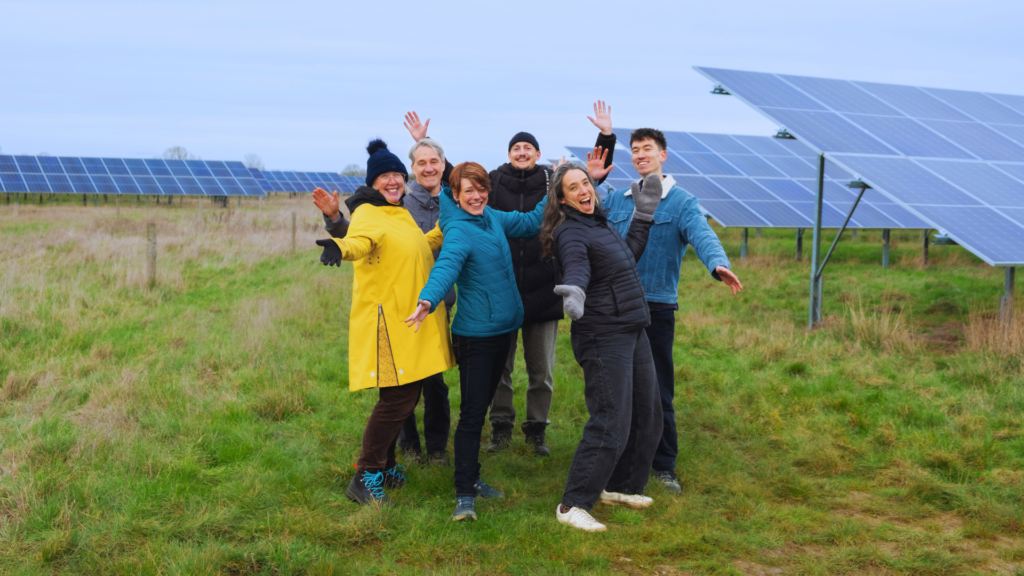
The policy covers two different, but related ways in which energy projects can benefit communities: Community Benefit Contributions and Shared Ownership.
Community Benefit Contributions (CBCs) are annual financial payments made by energy developers to local communities, are index-linked and paid over the operational lifetime of a project. They provide an income stream for community priorities such as solar panels on community centres to green space improvements, but they don’t give communities any stake in the energy infrastructure itself.
Community Shared Ownership (CSO) goes further. It means a community organisation holds an equity stake in a renewable energy project alongside the commercial developer. Rather than receiving a fixed per-MW payment, the community becomes a co-owner, receiving a share of the project’s income over its lifetime. Community-owned energy generates approximately 17 times the financial benefit per megawatt compared to CBCs alone, because that income compounds over decades.
Low Carbon Hub strongly supports a community shared ownership approach, which we expand a bit more on below.
Why this matters
Right now, there’s a national policy vacuum. The UK government has committed to consulting on community shared ownership as part of the Local Power Plan, but that process hasn’t yet begun.
The Government also published a working paper on the potential for a national requirement for community benefit contributions. But there was no mention of this when it published its Local Power Plan. So we just don’t know whether a national scheme, or guidance, will come forward.
These gaps in national policy has real consequences locally. The experience of negotiating community benefit arrangements around Botley West Solar Farm – an 840MW proposed project that would span multiple districts in Oxfordshire – has shown just how complex and inconsistent these processes can be without a clear framework. This policy is designed to change that and ensure there is a common, joined up approach.
So, Oxfordshire County Council is stepping forward with an interim policy designed to create clarity and opportunity for community energy in the county.


What the policy proposes
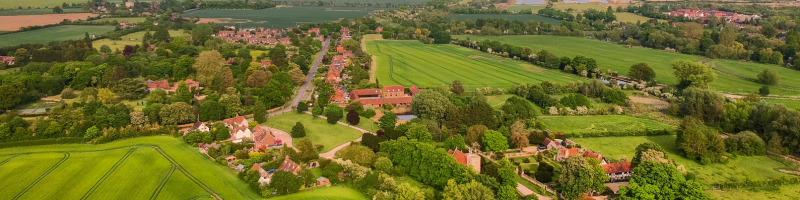
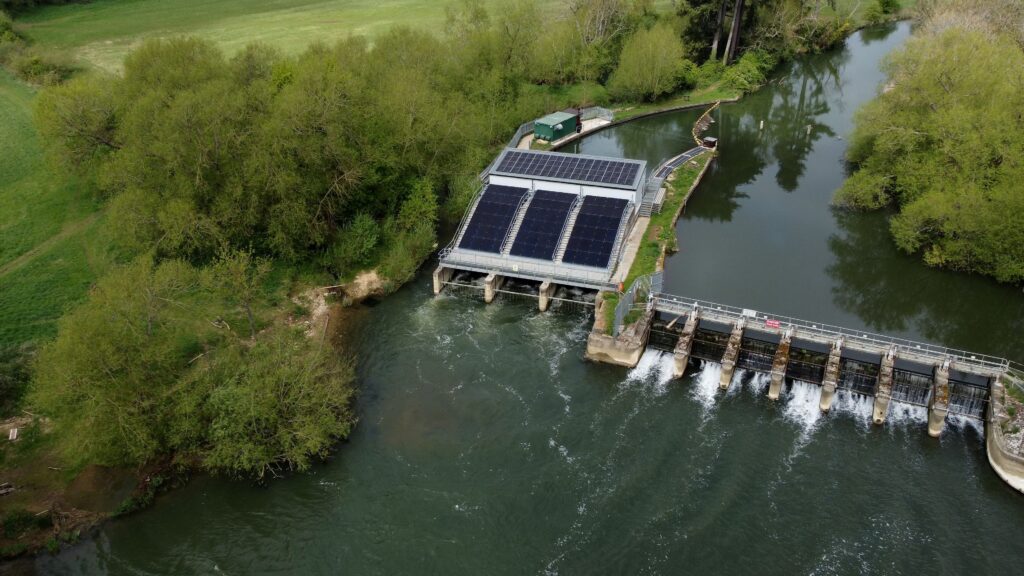
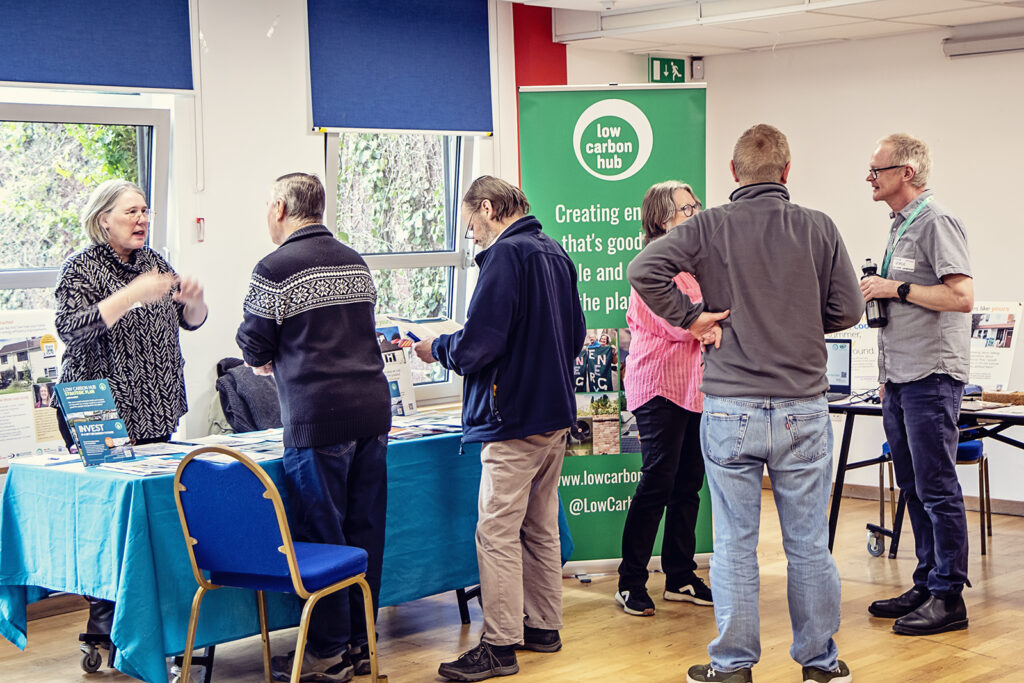
The draft policy applies to private, for-profit renewable energy projects of 5MW or greater, including solar, wind, battery storage, and other low carbon technologies. It covers projects already in the planning system, which is important: many Oxfordshire projects would not be captured by any future national mandate, meaning communities could miss out on significant benefits without this interim policy.
The policy has two main components:
- Community Benefit Contributions (CBC) – these are annual, index-linked financial payments from developers to local and strategic funds, at proposed rates of
– £1,200 per MW per year for solar
– £5,000 per MW per year for onshore wind
– £250 for battery storage.
These payments would run for the operational lifetime of each project, typically 20 to 40 years. The money would be split between local funds for communities hosting the project and Strategic funds – for larger scale projects and to be used to fund the energy transition. - Community Shared Ownership (CSO) goes further, giving communities a direct equity stake in projects (typically up to 10%) so that local organisations receive a share of income over the long term rather than a fixed payment.
With 41MW of community energy already installed in Oxfordshire, there’s potential for a further 75MW of co-ownership to come forward by 2030. This policy could help make that happen.
Our position
Low Carbon Hub was consulted on development of this policy and we strongly support Oxfordshire County Council’s leadership on this work. We believe that:
- Developers should contribute financially to the communities that host their energy infrastructure.
- Shared ownership is the most powerful form of community benefit; it keeps value circulating locally for the long term.
- This interim policy is needed precisely because national government has not yet acted. We will also continue to advocate for a nationally mandated approach.
What we’re asking you to do
- Respond to the consultation before it closes on Monday 15 June 2026. Your response matters and as replies are read as they come in, please do complete it early if you can.
You can download this Word version of the consultation to draft answers before completing the online form. - Share the consultation with your networks. The more voices that engage, the stronger the evidence base for a good policy outcome.
- Join us for our Q&A webinar on Thursday 28 May at 12pm (online via Teams), where you’ll have the chance to ask questions and hear more about what the policy means in practice.
👉 Have your say on the Let’s Talk Oxfordshire consultation
👉 Register for our Q&A webinar, Thursday 28 May, 12pm
Your responses will help inform the policy and shape the implementation of CBC and CSO opportunities in Oxfordshire.
Want to understand the background?
We’ve written in some detail on this subject and you can read some background here:
- Read the write up of our webinar on community benefit from renewables here.
- Read our response to the government’s working paper on community benefit and shared ownership here.
Oxfordshire County Council have produced a Summary and full Consultation document you can read on the Let’s Talk Oxfordshire website.
You can also download this Word version (provided with thanks by WOCORE) of the consultation document to help draft answers before submitting them on the online form.
More details can be found in our FAQ below:
FAQ
What is this consultation about?
Oxfordshire County Council is consulting on a draft policy that would require developers of renewable energy projects in Oxfordshire to contribute to local communities, either through financial contributions or by offering communities the chance to take an ownership stake in their projects. The consultation is open until Monday 15 June 2026 and anyone can respond here.
Which projects does the policy apply to?
The policy applies to private, for-profit low carbon energy projects with an installed capacity of 5MW or greater, located wholly or partly within Oxfordshire. This includes ground-mounted solar, onshore wind, battery storage, and co-located schemes. Crucially, it covers projects already in the planning system — many of which would not be captured by any future national mandate due to timing — meaning communities could miss out on substantial benefits without this interim policy in place.
What is a community benefit contribution?
A community benefit contribution (CBC) is a financial payment made by an energy developer to a fund that supports local projects and priorities. Under this draft policy, contributions would be annual, index-linked payments made over the operational lifetime of the project, typically 20 to 40 years.
The proposed rates are
- £1,200 per MW per year for solar
- £5,000 per MW per year for onshore wind
- £250 per MW per year for battery storage (with a minimum annual payment of £5,000 for battery projects).
To give a sense of scale: a 100MW solar project would generate £120,000 per year in community benefit contributions — amounting to £2.4 million over 20 years if paid at that flat rate before indexation. Across Oxfordshire’s current pipeline of projects, conservative estimates suggest CBCs could amount to over £20 million by 2030.
While useful, financial contributions don’t give communities any ongoing stake in the energy infrastructure on their doorstep, and that’s where community shared ownership comes in.
What is community shared ownership?
Community shared ownership (CSO) means that a community organisation, such as Low Carbon Hub or another community energy group, holds an equity stake in a renewable energy project, alongside the commercial developer.
Whilst there are different models, in practice it often means community organisations hold a stake of up to 10%, though this can be more depending on the structure agreed. Rather than receiving a fixed annual payment, the community becomes a co-owner, receiving a share of the income the project generates over its lifetime. This is fundamentally different from a benefit contribution: it creates lasting financial resilience, keeps value within the communities, and gives groups a real voice in the energy infrastructure developed.
Why does shared ownership matter so much?
Community-owned energy generates approximately 17 times the financial benefit per megawatt compared to community benefit contributions from private, for-profit projects. That’s because income from ownership compounds over decades, rather than arriving as a fixed per-MW payment.
In 2024/25, Low Carbon Hub’s 24.3MW community-owned portfolio generated over £511,000 in surplus for community benefit (see 2024/25 Annual Report) – the equivalent of around £21,000 per MW per year, compared to the £1,200 per MW CBC rate proposed for solar.
Beyond the finances, shared ownership changes the relationship between communities and energy infrastructure. It means local people have a genuine stake in the transition to clean energy, not just proximity to it, strengthening the case for community-owned energy. It generates the maximum community benefit funding that will help accelerate a just and fair energy transition and help mitigate the effects of climate change.
Over 70% of the amount of solar generation that Oxfordshire is forecast to need by 2050 is already in the “connection queue”. This means that developers are already beginning to prepare these projects. In order to secure the most community benefit of Oxfordshire’s energy generation (of which solar is our main and best source) we need to get community ownership (in full or shared) of some, if not all, of these forthcoming coming projects.
Does this affect the Planning system?
No. Community benefit contributions and shared ownership are entirely separate from planning decisions. Whether or not a developer has made a community benefit offer has no bearing on whether their planning application is approved or refused. The two processes run in parallel but through completely separate channels.
This policy is not about the Planning or approval of any clean energy projects. Advocating for strong community benefits, e.g. through this policy, does not interfere with or prejudge any planning outcome.
Where would the funds go?
The draft policy proposes two routes with CBC payments split between Local and Strategic Funds on a sliding scale based on project size: projects under 10MW direct 100% to the Local Fund; projects between 10MW and 20MW split 75% to local and 25% to strategic; projects over 20MW split equally, 50% to each.
The Local Fund will direct money towards projects and priorities in the communities closest to and most affected by an energy development. How the money is spent is guided by local communities, but could include solar panels on community centres, energy efficiency improvements for local households, sports facility upgrades, green space enhancements, or local transport schemes.
The Strategic Fund would be managed at county level and would support larger-scale, cross-boundary initiatives such as landscape-scale nature recovery, green skills and apprenticeship programmes, and scaling up community energy co-ownership across Oxfordshire.
What is a Strategic Investment Board?
The Strategic Investment Board (SIB) is a proposed governance body that would oversee how the Strategic Fund is used and maintain oversight of CBC and CSO arrangements across Oxfordshire. Importantly, the draft policy proposes formal representation for community energy groups on this board, meaning communities would have a voice in shaping investment decisions, not just receiving them.
What is Low Carbon Hub’s involvement in this policy?
Low Carbon Hub contributed to the development of this policy with Oxfordshire County Council and strongly support the council’s leadership in developing this policy. Ray Valley Solar, one of the projects in our portfolio, is cited in the consultation document as a worked example of community shared ownership in practice.
Why is Oxfordshire County Council doing this now? Isn’t this something for national government?
Yes, and we strongly believe national government should act. The UK government has committed to consulting on community shared ownership as part of its Local Power Plan, but that process has not yet started. The earliest a nationally mandated scheme could come into force is 2028, and it would only apply to new projects — not those already progressing through the planning system. Oxfordshire already has several private, for-profit low carbon energy projects in the planning pipeline. Without this interim policy, those projects could be built and operational before any national rules apply, and communities would miss out entirely. Oxfordshire County Council is stepping in to fill that gap now.
What is the Local Power Plan?
The Local Power Plan is a UK government initiative published in February 2026, designed to support locally-owned clean energy projects and administered through GB Energy (the publicly owned energy company established by UK government). It includes funding streams intended to accelerate community and local authority energy ownership, and commits to consulting on mandatory community shared ownership requirements. Those detailed proposals have not yet been published, which is why Oxfordshire’s interim policy matters.
What is a pipeline register?
The draft policy proposes a shared register of renewable energy projects that are in the Oxfordshire planning pipeline. Making this visible to community energy groups early gives communities time to explore co-ownership, structure their finances, and engage with developers before decisions are made. Currently, community groups often find out about projects too late to get meaningfully involved.
How do I respond to the consultation?
Visit the Let’s Talk Oxfordshire website and complete the consultation questions. The consultation covers both community benefit contributions and shared ownership, and you can respond to as many or as few questions as you like. The consultation closes on Monday 15 June 2026. Responses are reviewed as they come in, so the sooner you respond the better.
Can I find out more before responding?
You are welcome to join our free online Q&A webinar on Thursday 28 May at 12pm (via Teams) where you can ask questions and hear from our team. You can also read our webinar write-up on community benefit from renewables and our response to the government’s working paper via the links above. Register here.