

Borrow our thermal imaging cameras
See where your home is losing heat, start conversations in your community, and help people take practical steps to save energy.
Our cameras are free to borrow for Low Carbon Hub Community Groups. They can be used for household surveys or community building scans.
Community groups can book a camera using the online form below.
If you’d like to see how your home performs, get in touch with your local group – they’ll let you know if thermal imaging surveys are happening nearby.
For best results, carry out surveys on cold, dry winter evenings, ideally when there’s at least a 10–15°C difference between indoors and outdoors. Do plan ahead – camera availability is limited and they are in high demand over winter.
If you’re part of a Low Carbon Hub community group, you’re welcome to borrow one of our two thermal imaging cameras free of charge. It’s a simple way to show local residents where warmth is escaping and encourage action to make homes cosier and more energy efficient.
If you’d like to see how your own home performs, get in touch with your local group – they’ll let you know if thermal imaging surveys are happening nearby.
Why thermal imaging matters
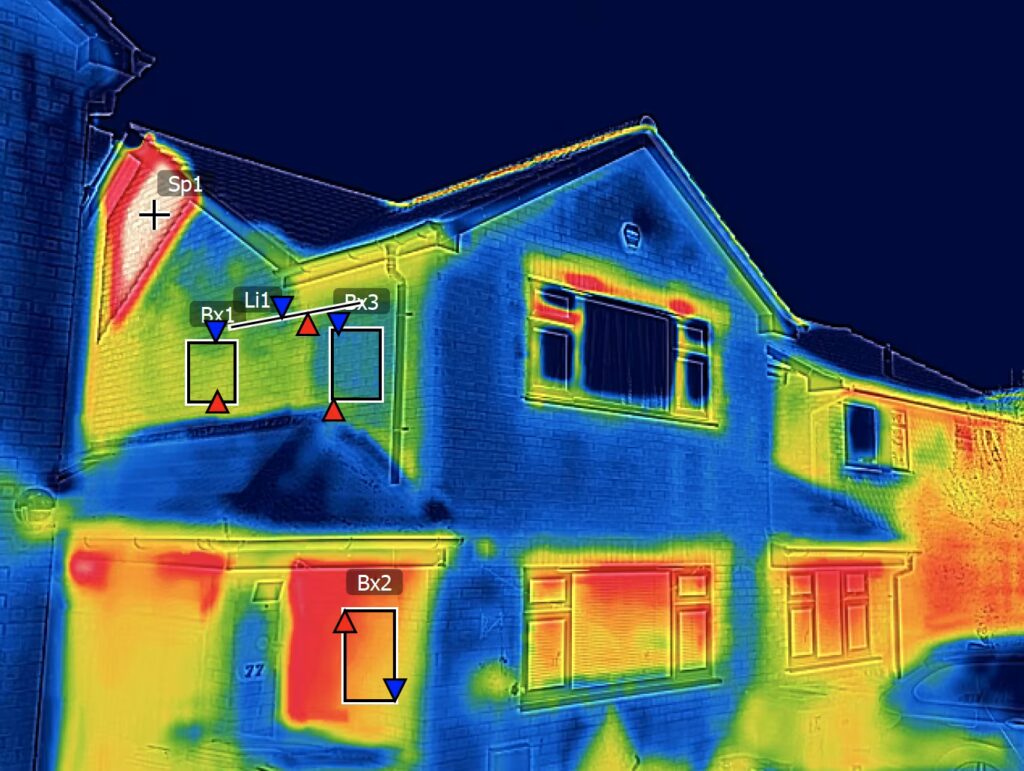
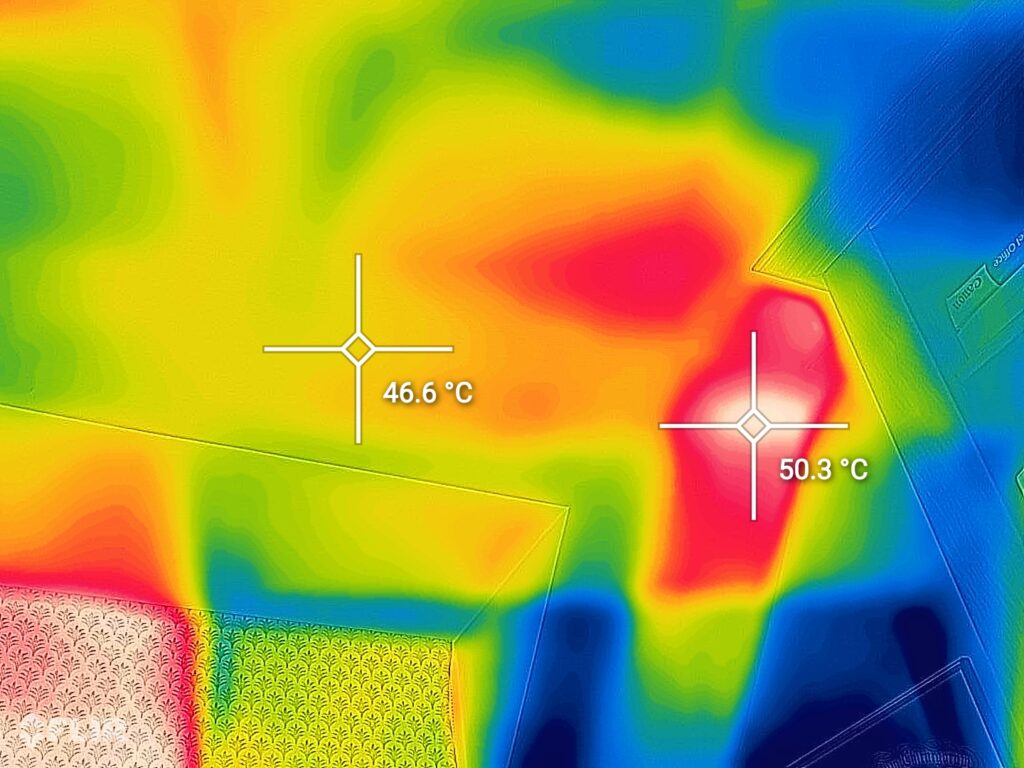
Thermal imaging makes the invisible visible. By using an infrared camera, you can quickly see where heat is escaping from a building: through poorly insulated walls, gaps around windows, unsealed floorboards, or draughty loft hatches.
For homeowners, it’s often the first time they see clear, tangible evidence of where their home is losing heat. That simple image can be the spark that leads to action.
For community groups, thermal imaging is a powerful way to engage people locally. It creates conversations, builds awareness, and encourages households to make improvements that cut bills, reduce carbon, and keep homes warmer.
What groups get: free use of our thermal imaging cameras, training, support, and ready-to-use resources to run local projects.
What homeowners get: clear images of heat loss in their homes, plus guidance on simple next steps and where to find funding.
A thermal imaging project is a fantastic way of engaging householders in home energy efficiency, by showing them tangible evidence of the main areas where their home is losing heat.
Cathy Ryan, Community Engagement Manager, Low Carbon Hub
In action: thermal imaging around Oxfordshire
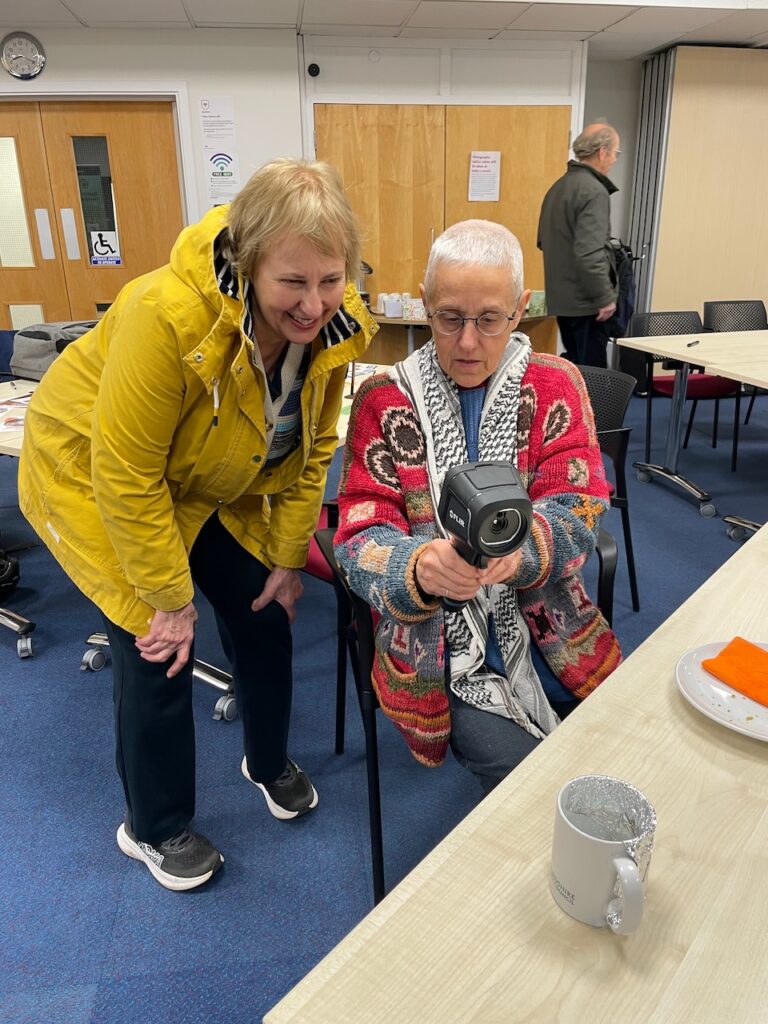
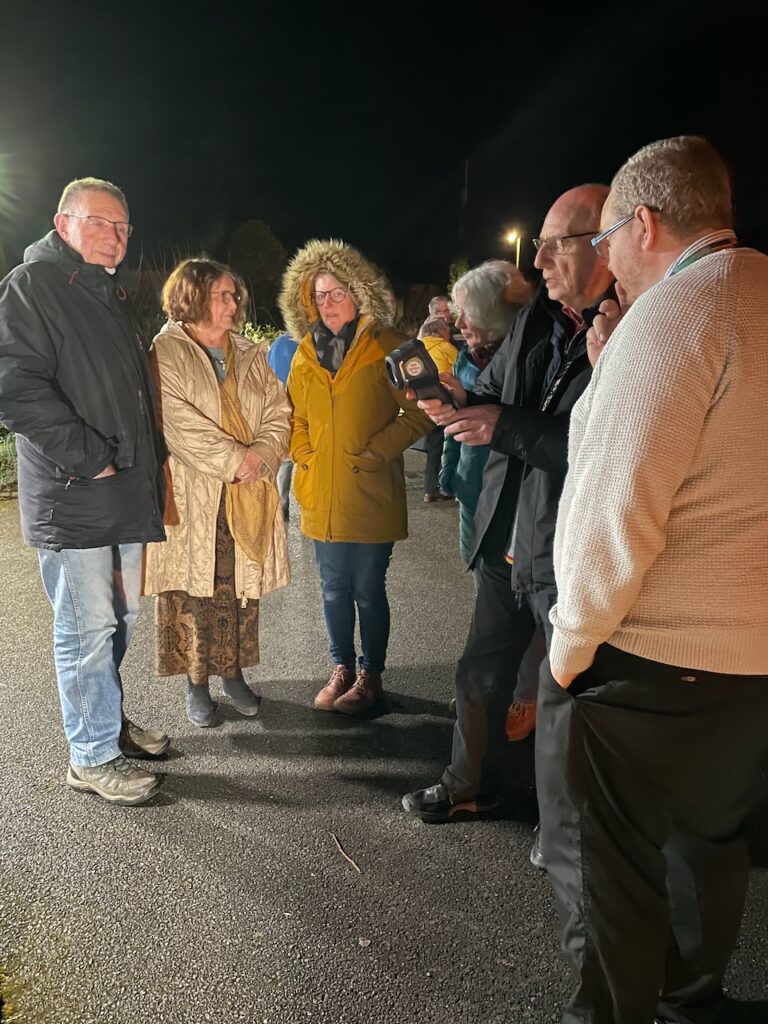
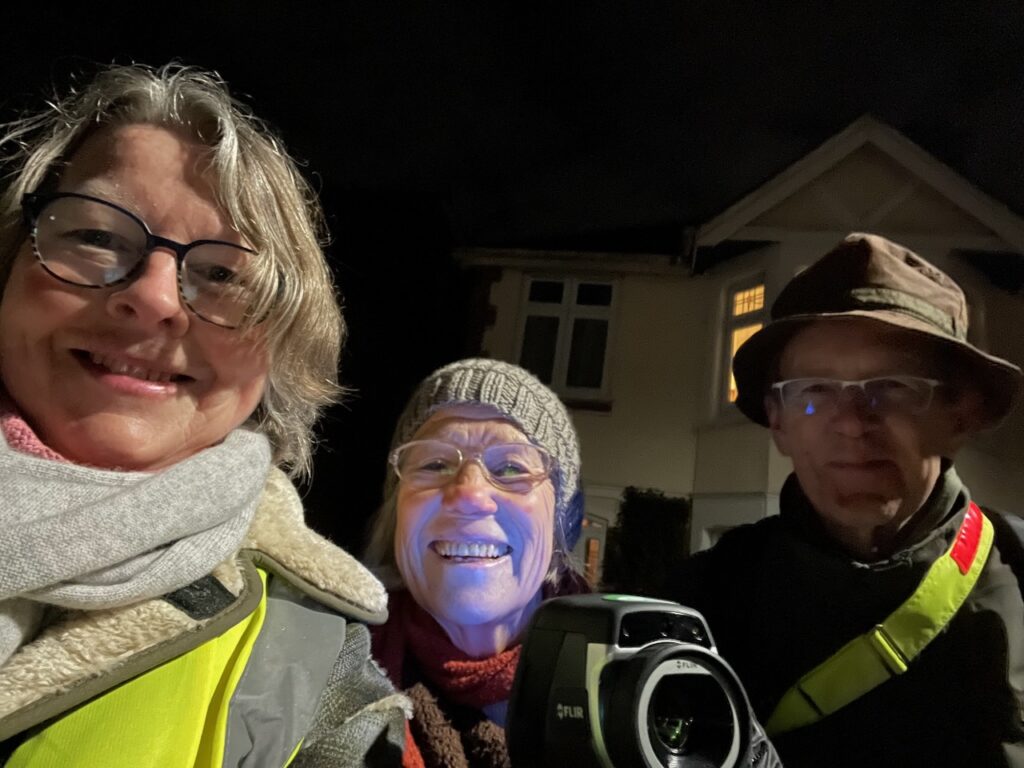
From learning to use the thermal imaging camera to community groups taking it out on the streets of Eynsham. When used after training, it can reveal everything from winter heat loss (bottom left) to summer heat build-up in roofs and rooms (bottom right).
About the cameras
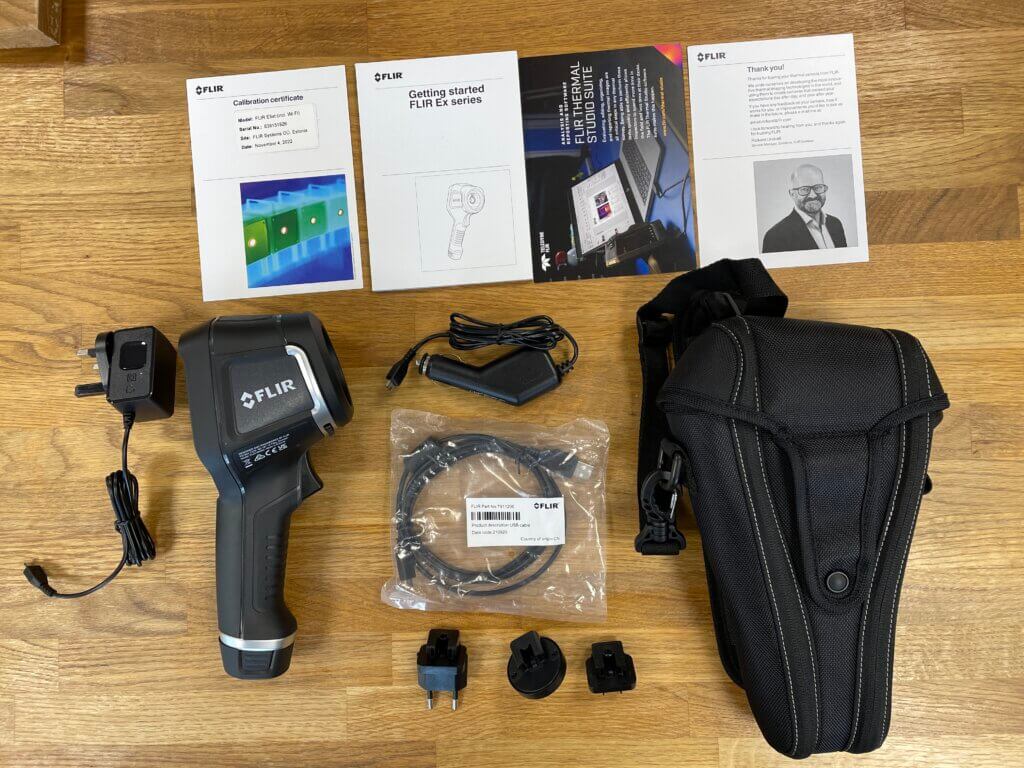
We have two thermal imaging cameras for local Low Carbon Hub Community Groups to borrow. These cameras help communities run projects that show homeowners exactly where their homes are losing heat – whether through walls, windows, roofs, or hidden draughts.
By using thermal imaging, you can see the problem areas for yourself and make informed decisions about insulation and other energy-saving improvements. Many local groups offer thermal imaging surveys as part of their community energy projects, helping homeowners take the first step towards a warmer, more efficient home.
Camera 1 (model: FLIR e30bx)
- Spare battery
- Case dimensions:
- Weight (including case):
- 4 hr operating time
- 160 x 120 pixels
- -20°C to 120 ºC temperature range
- Built-in WiFi
Camera 2 (model: FLIR E5xt)
- Case dimensions:
- Weight (including case):
- 4 hr operating time
- 160 × 120 pixels
- -20°C to 400°C temperature range
- Built-in WiFi
Thermal imaging training and support
We support community groups to use thermal imaging confidently, safely, and proportionately.
Our training and resources focus on helping groups understand what thermal imaging can and cannot do, how to use the cameras sensibly, and how to support residents without taking on an expert role.
Our support includes:
- Clear, practical workshops for community groups
- Guidance on using the cameras and avoiding common mistakes
- Simple principles for interpreting images responsibly
- Advice on running a local project in a way that fits volunteer capacity
We also have a set of practical presentation resources that groups can request:
- Thermal imaging for community groups – focused on setting groups up confidently and safely before surveys
- Household energy advice – a stand-alone session for residents that complements thermal imaging without putting volunteers at risk
- Using our thermal imaging cameras – a simple instruction manual for using the cameras and avoiding common pitfalls
Additional resources from past sessions are also available, including a short guide to interpreting thermal images and the CAG Network’s updated guide to thermal imaging (PDF), which includes forms and templates.
Run a project in your community
If you’re planning to borrow a thermal imaging camera, we provide practical tools to help you run a project smoothly and responsibly.
Our resources are designed to support the whole flow of a community project, without adding unnecessary complexity.
Support includes:
- Recruiting participants using clear, trusted messaging
- Capturing images and information responsibly, with simple consent guidance
- Running surveys safely and in suitable conditions
- Sharing images with residents in a clear, proportionate way
- Signposting people to trusted next steps, including advice, funding, and local support
Alongside the more detailed CAG Network guide, you can also download a short leaflet that explains how to run a thermal imaging campaign (PDF) at a glance. This is useful as a quick reference for volunteers or during a live project.
Together, these resources are designed to help community groups focus on what matters most: clear communication, realistic projects, and helping residents take informed next steps at their own pace.
Next steps for homeowners
Had your home scanned? Here are some practical next steps.
Start with simple, low-cost fixes
Get clear energy-saving advice on draught-proofing, sealing loft hatches, and topping up insulation. Small changes can make a real difference to comfort.
Check what support is available
If cost is a concern, you may be eligible for help. Check current support through schemes such as the Home Upgrade Grant via Welcome the Warmth, or independent advice from Better Housing Better Health.
Thinking about bigger improvements
If heat loss looks more widespread, you may want to step back and think about your home as a whole. Free, independent advice is available through Cosy Homes Oxfordshire to help you plan improvements in the right order, at your own pace.
Renovation isn’t the same as retrofit
Many people improve their homes but still feel cold or uncomfortable. Our blog post When home improvements don’t deliver comfort explains why renovation alone doesn’t always solve problems – and why a more joined-up approach can work better.
Use our Retrofit Guide
Making your home more energy efficient doesn’t have to be complicated. Whether you own or rent, our Retrofit Guide explains what to do first, how to find support, and where to get reliable advice – all in plain English.