
Plug in, power up: solar energy just got simple
Author
 Christian Guthier
Publication date 9 July 2026
You might have seen or heard about plug-in solar popping up in the news lately. Small solar panels, standard wall socket, no scaffolding, no fuss. It’s real, it works, and it’s coming to the UK very soon. And for the millions of people who rent, live in flats, or simply don’t have a suitable roof – it will be the first time solar energy has ever been a realistic option.
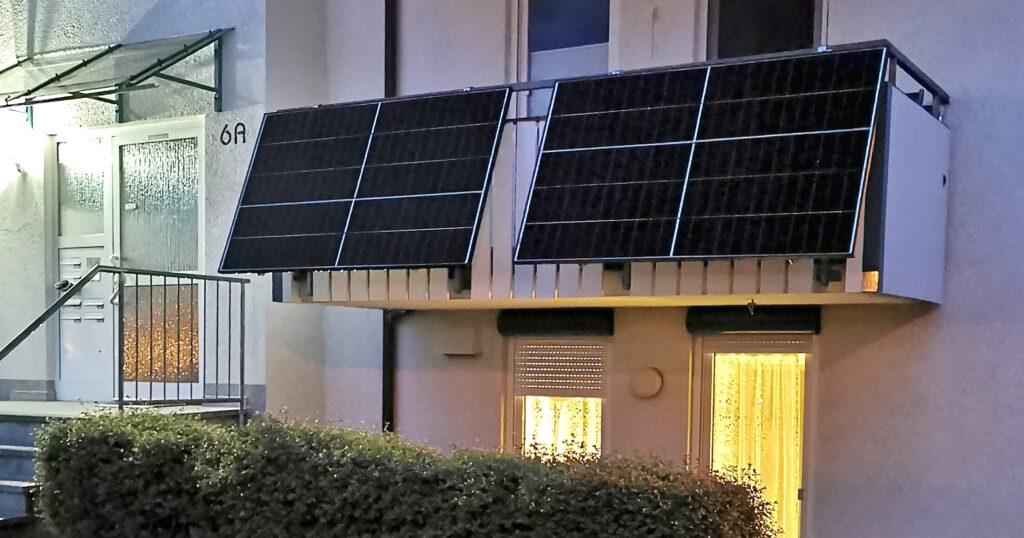
Plug-in solar is exactly what it sounds like. You fix one or two solar panels to a sunny surface – a fence, a wall, a shed roof, a balcony rail, a garden frame – connect them to a small device called a microinverter, and plug it into a standard socket. From that moment, your home starts using free solar electricity whenever there’s daylight. They generate best in direct sunshine, but the UK’s grey skies are less of a problem than you might think. Your appliances draw from the panels first and the grid second. Nothing about how you live needs to change.
A two-panel 800W system generates around 500–800 kWh a year. It won’t power your whole home, but it makes a real dent in your daytime electricity use – and it can pay for itself in two to three years.
The UK is nearly there
The UK is putting the regulatory framework in place to make plug-in solar fully legal for home use. The technology already meets established European safety standards – tried and tested across millions of installations across Europe. The final pieces are falling into place, and major UK retailers are already preparing to stock kits.
Getting set up is straightforward: systems up to 800W connect through a standard wall socket. You register your system at energynetworks.org – a quick online form (not live yet), and you’re done. The government has also announced plans to fund plug-in kits for low-income households.
Europe is already using it
Plug-in solar is nothing new across the Channel. Germany legalised it as far back as 2019, and today millions of households there are using it – with uptake growing fast across France, Austria, the Netherlands and beyond.
The safety record across all those installations? Zero incidents with compliant systems. That evidence base is exactly what brought UK regulators on board.
Germany also revealed something interesting about how people use these systems in practice. Around 90% of buyers chose panels and battery together from the start – thinking about the whole system from day one, not as an afterthought. We’ll come back to why that’s worth considering.
What does it cost, and will I save money?
UK pricing is now starting to firm up. Two-panel 800W kits are expected to retail from around £400. Entry-level single-panel kits aren’t officially priced for the UK yet, Europe-based estimates put them somewhere around £200 to £300. Add a small battery and you’re looking at more. Prices will vary by brand and capacity.
Annual savings on an 800W system are estimated at £70 to £110 a year, giving a payback period of around four to seven years. That’s a modest but genuine return, with no maintenance costs and a system that keeps generating for 20-plus years.
One thing worth knowing: without a battery, you save most when you’re at home during the day while the panels are generating. Adding a battery changes the economics considerably.
Note: if you own your home and have a suitable roof, a full rooftop solar installation will deliver significantly better returns.
What it means for you
Plug-in solar means something different depending on where you’re starting from.
Save money and take control of your energy costs
A two-panel system costs around £500 and pays back in two to three years. After that, it’s saving you money for the next two decades + with no ongoing costs, no maintenance contracts, and nothing complicated to manage.
The real opportunity is in combining plug-in solar with a small battery and a smart tariff. The battery stores your daytime solar generation for use in the evening, and on a smart tariff you can also top it up overnight at cheaper rates. Together, the three can add up to potentially £300 to £400 a year in savings.
Most systems come with an app that shows live generation and usage. Watching your panels earn their keep turns out to be genuinely satisfying.
Reduce your carbon footprint
Every kilowatt-hour you generate yourself is one you haven’t bought from the grid. Grid electricity still carries a carbon cost – even as renewables grow, it isn’t clean all the time.
The carbon payback period for a solar panel – the time it takes to offset the emissions from manufacturing – is typically one to four years. After that, it’s clean generation for 20-plus years. Not a magic fix on its own, but a real and measurable contribution – and one that’s now open to millions of people who previously had no route into solar at all.
If energy costs are a real worry
Plug-in solar is genuinely more accessible than rooftop solar – lower cost and simpler to install. But even at £200 to £500, the upfront cost isn’t trivial on a tight budget, and the savings take a couple of years to build up.
The good news is that the government is planning a funding pilot specifically designed to put plug-in kits into low-income households, delivered through local authorities. It’s worth keeping an eye on what’s available in your area.
And if you’re currently struggling with energy bills, there may be more immediate ways to help – insulation improvements, energy efficiency upgrades, or switching to a better tariff – that reduce costs faster with no upfront spend. Our energy advice pages are a good place to start.
Renters and flat owners
Until now, solar energy simply wasn’t an option if you rented your home or lived in a flat. Plug-in solar changes that. You’ll need your landlord’s permission first – and under the Renters’ Rights Act 2025, they can’t unreasonably refuse. A simple written request is usually all it takes.
One caveat: if you’re a leaseholder or in shared ownership, your lease may have clauses about external alterations. It’s worth checking before you buy.
The other good news: plug-in solar goes with you when you move. Unlike rooftop solar, it’s yours to take.
A bright plug-in future
Here’s what makes all of this genuinely exciting – beyond the immediate savings: Plug-in solar is the leading edge of something bigger: energy technology that anyone can access, without specialist contractors, planning permissions, or significant capital. Think about how electric vehicles have gone from niche to mainstream in just a few years. The same is happening in home energy generation.
In Germany, nearly all buyers paired their plug-in solar with a conventional wall-mounted battery – because a battery transforms the economics. Instead of only saving during daylight hours while you’re at home, you store that free solar energy and use it in the evening when grid electricity is at its most expensive. Generate, store, use as one system. That’s the real opportunity.
Now the UK is catching up. UK energy think-tank Regen is already making the case that plug-in batteries should be made available in UK homes – and they’re already being developed for the UK market. Watch this space.
Plug-in solar, plug-in batteries: smarter, simpler, more accessible at every step. A home energy system that far more people can set up themselves, on their own terms.
Plug-in solar kits are expected to hit the shelves of Lidl, Amazon, B&Q, Currys and Screwfix – major retailers who’ve already been sitting around a table with the government to make it happen. Your own solar energy is about to become as easy to buy as a new appliance.
What is in a typical kit
For the more technically minded, here’s what to expect. Kits vary by brand, but the core components are consistent: one or two solar panels paired with a microinverter (the small device that converts solar electricity into power your home can use – [more on how inverters work here]).
Consistent across most kits:
- Panel output: 400W per panel, one or two panels per system
- Maximum system output: 800W (the UK regulatory cap)
- Microinverter: typically certified to EN 50549, the European safety standard
- Connection: standard wall socket
- Panel lifespan: 20–25 years
- Annual generation: 500–800 kWh for an 800W system, depending on location and positioning
Worth checking before you buy:
- Panel dimensions and weight – important if space or mounting is limited
- Mounting hardware – does it suit your fence, wall, balcony or garden?
- App and monitoring features
- Battery compatibility – not all kits support battery add-ons
- Warranty length
The two specs that matter most for safety and legality are the 800W cap and EN 50549 compliance. Everything else varies by brand.
[Update, 27 July 2026: This piece has been updated since it was first published. The government has now confirmed the law change: plug-in solar becomes legal for UK homes from 27 August 2026, and official pricing and savings guidance is starting to firm up. We’ve updated the figures, retailer list and timeline below to reflect this (source: The Guardian, 23 July 2026).]
Home Energy Newsletter
Plug-in solar is just one of the practical energy solutions we’re tracking. For the latest developments, advice, and tips on making your home more energy efficient – whether you’re on your own or part of a community group – do sign up to our Home Energy newsletter.