
The Low Carbon Hub’s Community Coffee Morning – Community Energy Fortnight 2020
Author
 Tabitha Whiting
Publication date 17 June 2020
How to keep the momentum going on climate change and ensure a green recovery from COVID-19: advice and ideas from low carbon community groups across the UK
From the very start of lockdown restrictions in the UK we’ve been impressed and inspired by our Low Carbon Hub CIC Community Groups, who have been adapting to the situation in a myriad of ways and continuing to have a positive impact on tackling the climate crisis and engaging their local community.
In May we held a Community Coffee Morning with our Oxfordshire groups sharing their experiences and activities. We had such positive feedback from groups that we decided we’d hold a nationwide version as part of Community Energy Fortnight (13-28 June 2020) – an opportunity for low carbon groups across the UK to come together and share their ideas and experiences on keeping the momentum going on climate change during COVID-19, and how we use what has been learnt for a better future.
So, on 16 June we held the Low Carbon Hub’s Community Coffee Morning – the nationwide version! Once more we heard of some incredible community initiatives and had lots of positive responses about the value of bringing groups together to share learnings.
We were joined by over 40 participants from across the UK and beyond, with one attendee joining us from Holland! You can see the breadth of locations in this map of attendees:
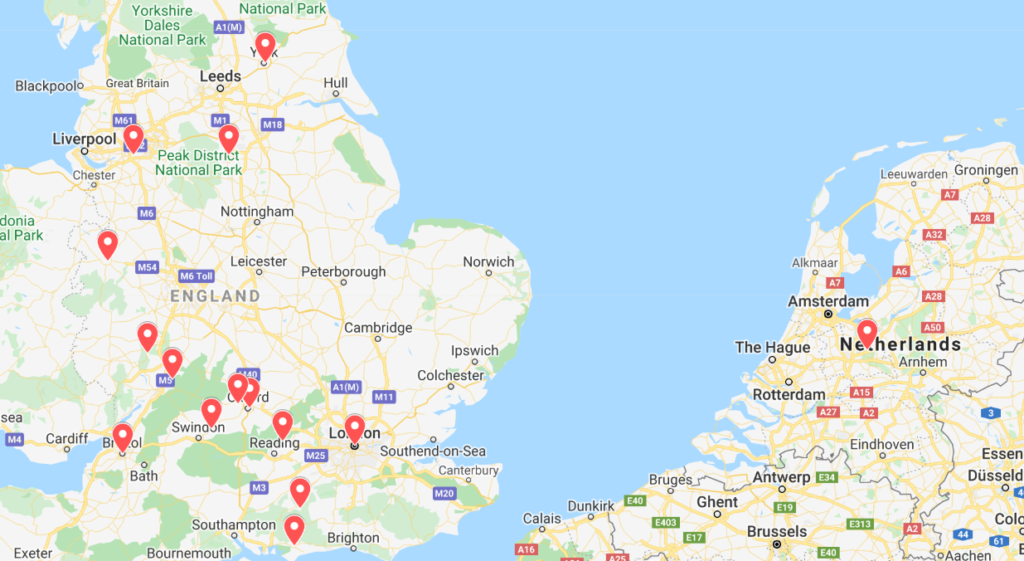
The meeting was split into two sections: sharing learnings from Oxfordshire, and group discussions. We recorded the meeting, so if you’d like to catch up you can do so with the below video. We’ve also written up a summary of the event, including lots of links and resources which came up, in the rest of this post.
Sharing learnings from Oxfordshire
Firstly, we were joined by a few community groups in Oxfordshire who spoke about their activities during lockdown:
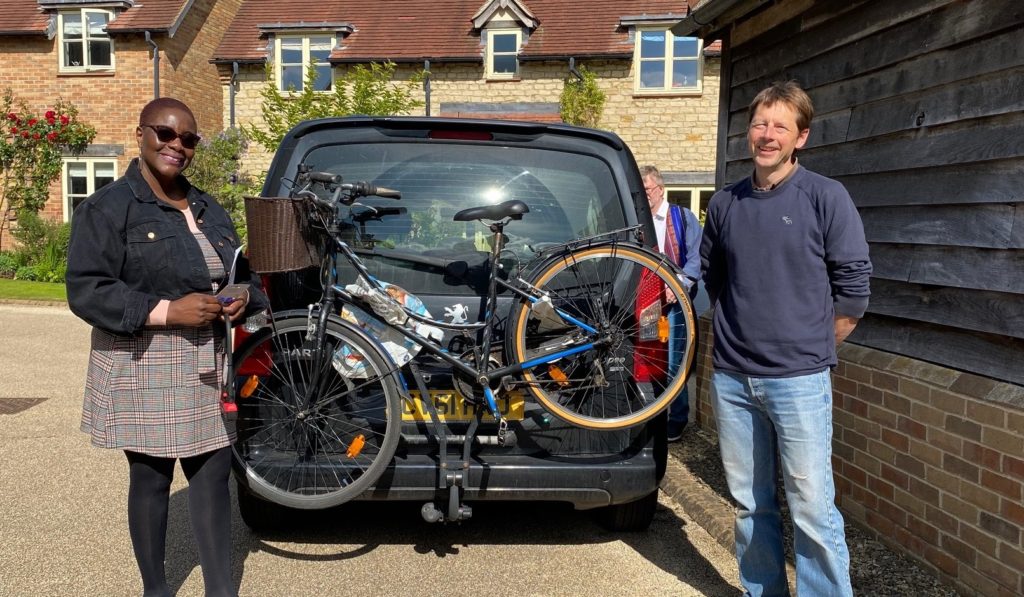
Refurbishing bikes for key workers
A consortium of groups, led by Active Oxfordshire and Cyclox, have come together to refurbish bikes and donate them to Oxford’s key workers, enabling them to get to work safely and without environmental repercussions. So far, they’ve refurbished and donated over 120 bikes! There’s also been lots of interest in replicating the scheme elsewhere, and so Alison Hill shared the group’s key learnings:
- Finding organisations who can work together to get a full system going – cycling groups, sports/activity groups, mechanics.
- Integrating with local councils is important to ensure longevity. In Oxford, the city council are part of the project’s steering group.
The group are happy to share their learnings and principles with others hoping to replicate the idea. Please contact the Cyclox team on contact@cyclox.org for more information.
Low carbon educational resources for homeschooling
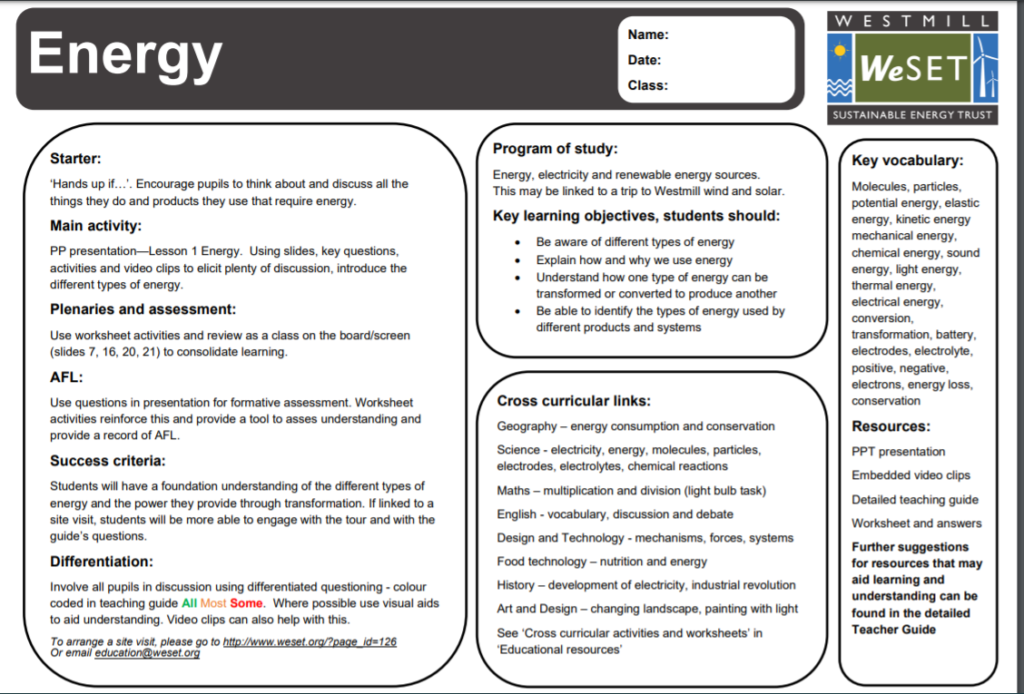
Westmill Sustainable Energy Trust (WeSET) have been developing a set of educational resources (lesson plans, presentations, activities) to support home-schooling. Topics covered so far include sustainable energy and biodiversity, building off their knowledge from their wind and solar farms.
The resources are free and available to all, so do feel free to share with local schools, church groups, parents and more. Transition Ilford were present during the meeting, who started the Children in Permaculture project, aiming to engage children in outdoor learning, which would also sit nicely alongside WeSET’s resources.
Engaging members of the community in Rose Hill and Iffley
Rosehill and Iffley Low Carbon (RHILC) have used lockdown as an opportunity to engage with members of the local community who they may not otherwise have had chance to, including:
- Sharing repair tips on their social media channels as more people are at home, helping people with mending their clothes, maintaining their bicycles, making plant pots out of newspaper, and more
- A recent seedling swap which saw over 600 plants swapped in the local area
- The local community has pulled together to ensure that trees planted before lockdown have been maintained and watered.
Opening up the climate conversation with Low Carbon Oxford North
Low Carbon Oxford North have had success with bringing their events online, particularly with offering open, supportive and non-judgmental spaces for anyone to discuss their questions, concerns, and feelings about climate change.
- Climate Café: LCON were running a monthly in-person Climate Café, a supportive place to discuss how the climate crisis is affecting you, open to anyone. They’ve now moved this online to Zoom.
- Climate Conversations: a two-part online workshop for anyone who struggles with having open conversations with friends, family, or colleagues about the climate crisis, led by Rebecca Nestor (LCON Trustee) and based on materials created by psychologist Rosemary Randall and the team at Climate Outreach.
- Speaker events: the group had a couple of speaker events already being planned, which have now moved online, and are planning more future events. This includes an event on sustainable fashion and how to reduce the global environmental impact of the clothing sector which raised lots of interest from attendees.
Shared electric bikes in Hook Norton
Hook Norton Low Carbon have had a shared e-bike scheme since long before COVID-19, aiming to change mindsets on transportation options and what using an electric bike could bring.
With lockdown, they saw a huge increase in people booking the bikes, from the bikes being used once or twice a week, to constant bookings. With cars off the road, people feel much safer about trying out an e-bike, and so they’ve been widely used for both transportation and exercise. It’s been a great opportunity to reach people who may not otherwise have explored low carbon transport options.
How can we use what we’ve learnt during lockdown to ensure a better future in the context of climate change?
After the presentations from groups in Oxfordshire, we split off into smaller discussion groups to share ideas from across the country. The central question was: how can we use what has been learnt during lockdown to ensure a better future, in the context of climate change? The groups then fed back on their discussions, with the main topics being:
- Localisation. With lockdown we’ve all become much more local and community-centred, especially when it comes to food shopping. There’s a need to educate and encourage projects around growing food locally and eating seasonally, as well as sharing skills within a community to become more self-sufficient. There’s also been more focus on the wellbeing and connectivity of our communitiys, with the ‘leave-noone-behind’ campaign by Transition Lymm discussed as an example – they’ve assigned ‘Street Champions’ who ensure all vulnerable residents are being looked after.
- Active travel. It’s great that there’s been such an increase in people walking and cycling, as well as reduced air pollution, but how do we build on that to ensure our towns and cities facilitate this? Further, what can we do to promote cycling safety now that cars are returning to roads, with lots of new cyclists? The key solution was to engage with local councillors and make sure they understand and champion the issue.
- Online meetings. Moving events online has meant less time wasted on travel as well as the ability to reach much broader audiences – so this is something we’d like to stay from lockdown.
- Education. Many groups find it difficult to reach children in a meaningful way even when schools are operating normally – as climate change is often relegated to being a topic or an assembly discussion. With many children not in school, how do we engage with young people and embed climate change as part of every curriculum and youth group? Resources like those developed by WeSET are a great start.
Read next…
The Low Carbon Hub’s Community Coffee Morning – Community Energy Fortnight 2020
How to keep the momentum going on climate change and ensure a green recovery from COVID-19: advice and ideas from low carbon community groups across the UK From the very start of lockdown restrictions in the UK we’ve been impressed and inspired by our Low Carbon Hub CIC Community Groups, who have been adapting to the […]