
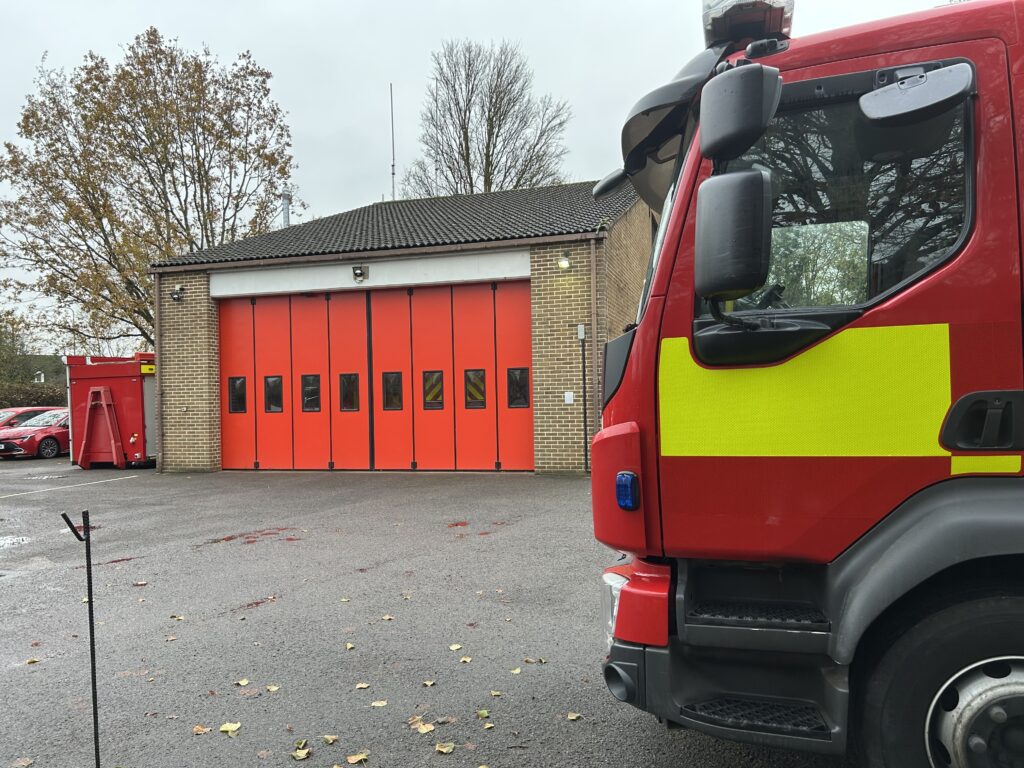
Keeping staff and kit warm at Eynsham Fire Station
Author
 Hal Wallis
Publication date 4 February 2026
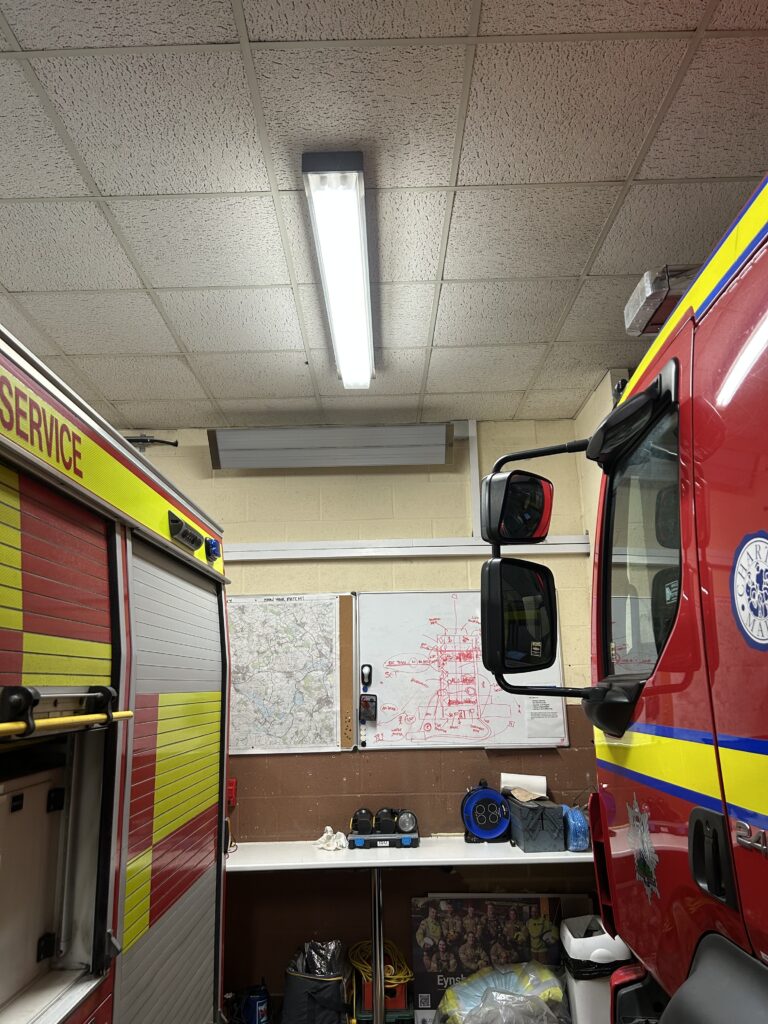
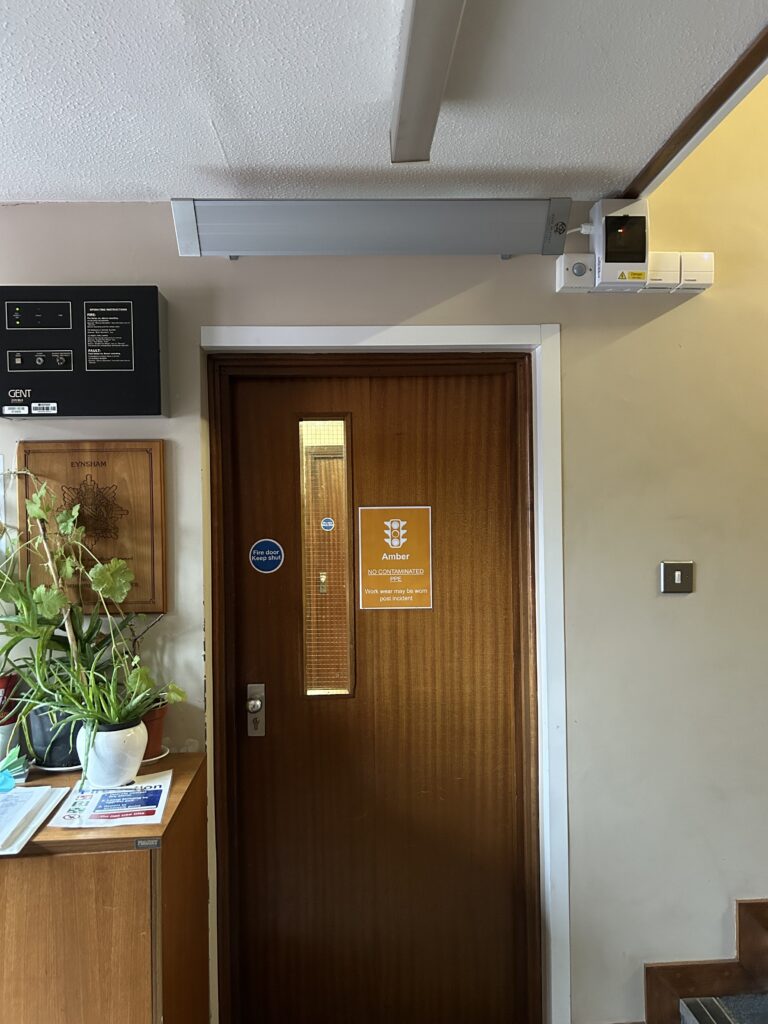
Eynsham Fire Station has recently installed infrared heating panels across the building, covering the crew office, communal areas, changing rooms and the engine bay itself.
The core problem with heating a fire station is that it is not a building you can ever really seal up and keep warm in the conventional sense. The engine bay doors open every time a call comes in, at any hour, and in winter that means cold air flooding back in repeatedly throughout the night.
Trying to heat that space by raising the air temperature is a fairly thankless task, because you lose it so quickly and the space is large enough that getting it back up takes real energy and time.
But the concern in the bay is more about equipment than comfort. Modern fire engines carry electronics, hydraulic systems and other liquid equipment that does not respond well to being repeatedly frozen and thawed over the course of a winter. Keeping the vehicles and their contents at a stable temperature overnight is an operational matter, and it was a problem the station needed a practical answer to.
The reason infrared works reasonably well in this situation is that it does not rely on warming the air at all. The panels emit radiant heat that warms surfaces and people directly, which means that opening a large door does not immediately undo everything. Someone standing in the bay will still feel the warmth coming from a panel overhead even if the outside air is coming in. Above the fire engines, the panels are positioned to keep the vehicles themselves from getting too cold overnight, rather than attempting to heat the whole volume of the building.
In the offices and crew rooms the logic is slightly different. Those spaces are used at irregular hours and it would not make much sense to heat them continuously. Infrared panels reach their working temperature fairly quickly after being switched on, so the rooms can be brought up to a comfortable level without a long lead time, which suits the way these spaces are actually used.
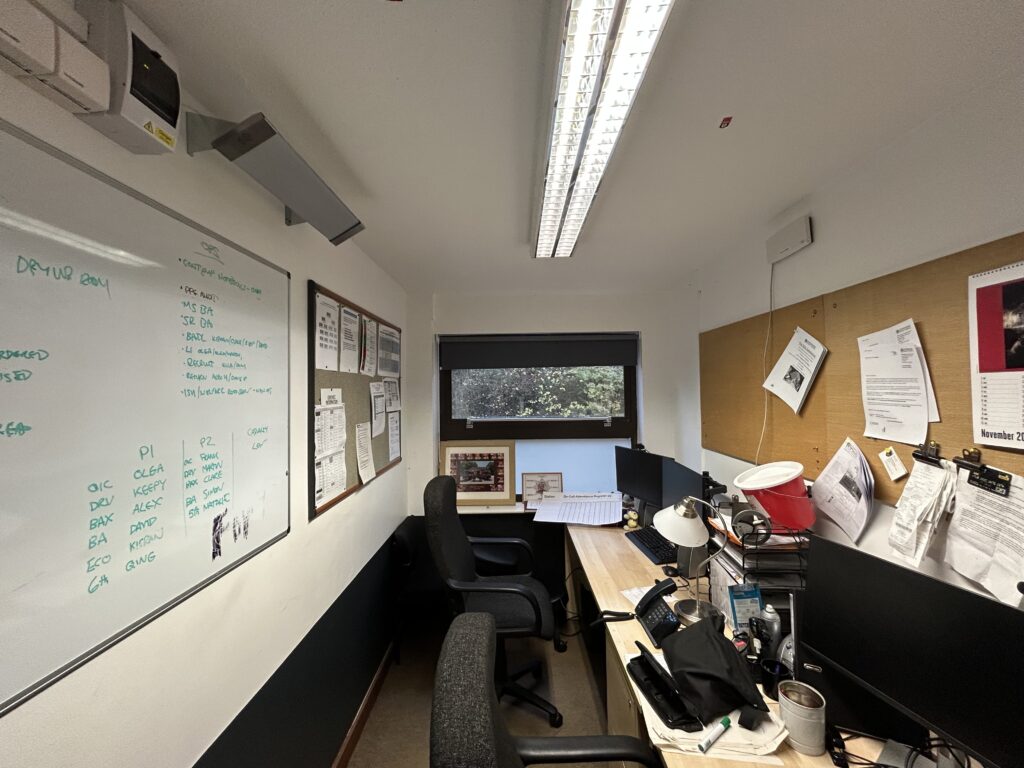
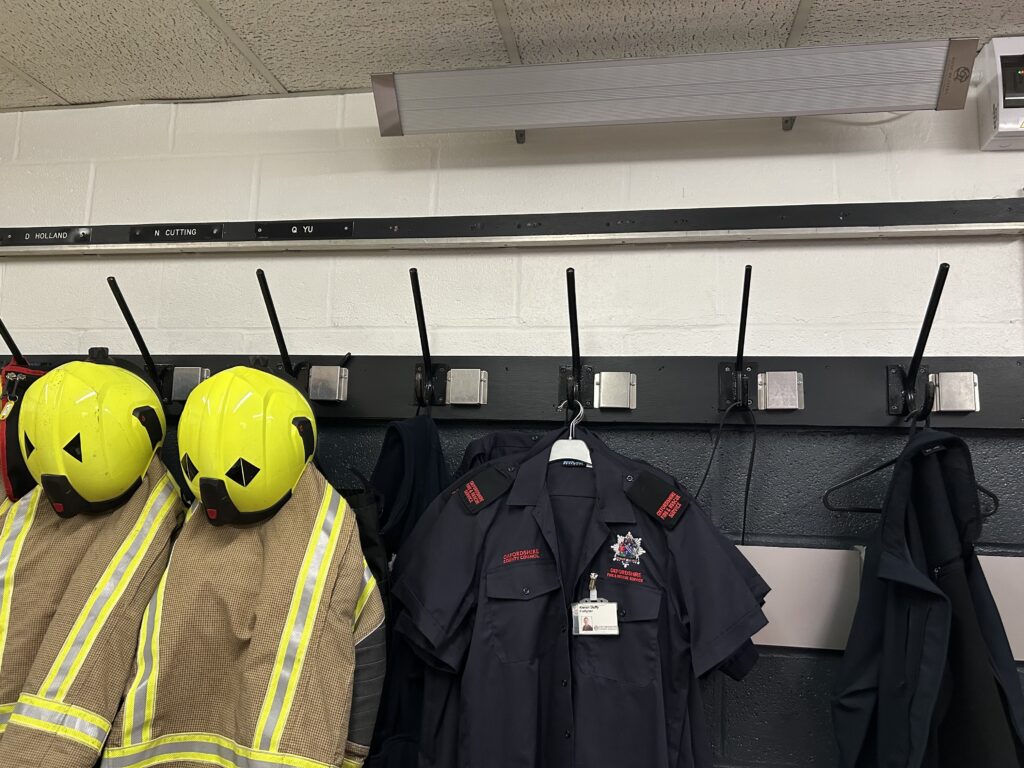
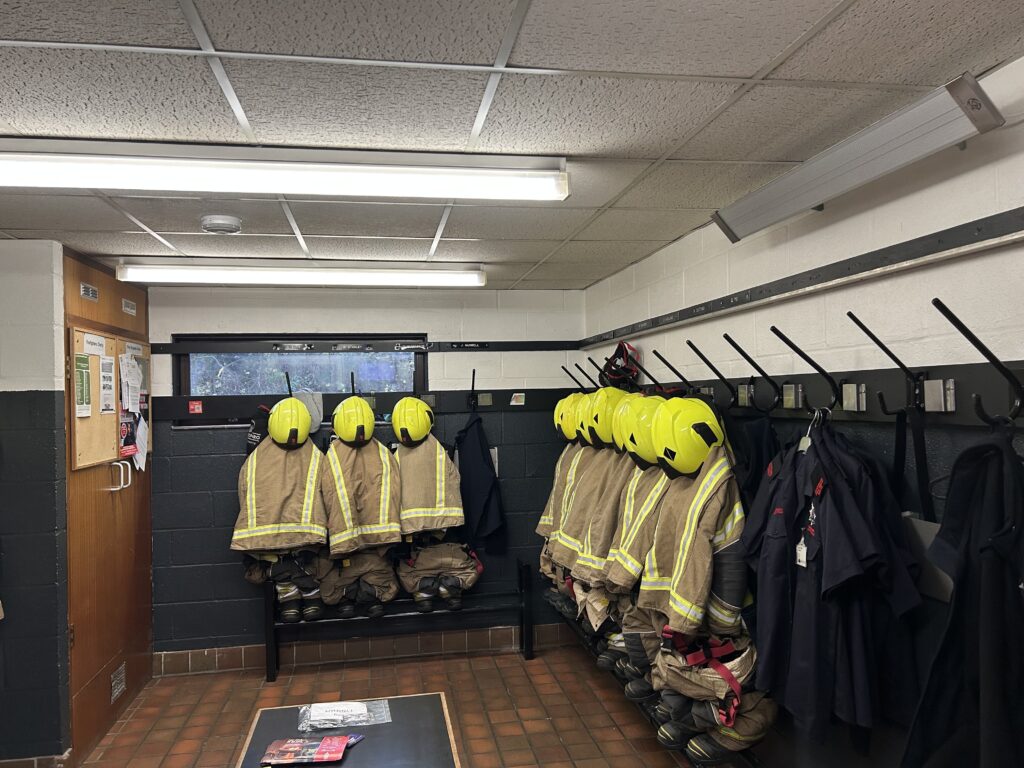
IR panels also tend to work particularly well in spaces where people are in more or less fixed positions for stretches of time, at a desk for example, because the direct radiant warmth reaches the person rather than just the air around them.
Eynsham Fire Station sits within the CAPZero area, where the Low Carbon Hub is working with communities across West Oxfordshire to understand how the area might move toward a zero-carbon local energy system. This unique heating installation is one small part of that picture, which may be replicable for other rural stations or community buildings dealing with the same basic challenge of spaces that are large, draughty, intermittently used, or all three at once.