
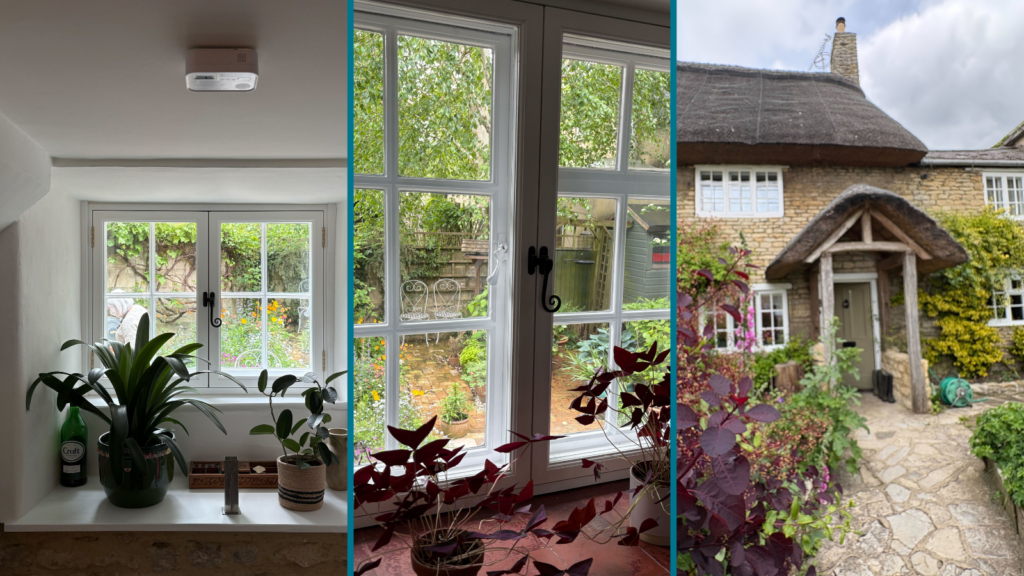
Energy efficiency and comfort in an 18th century home
Author
 Hal Wallis
Publication date 15 March 2026
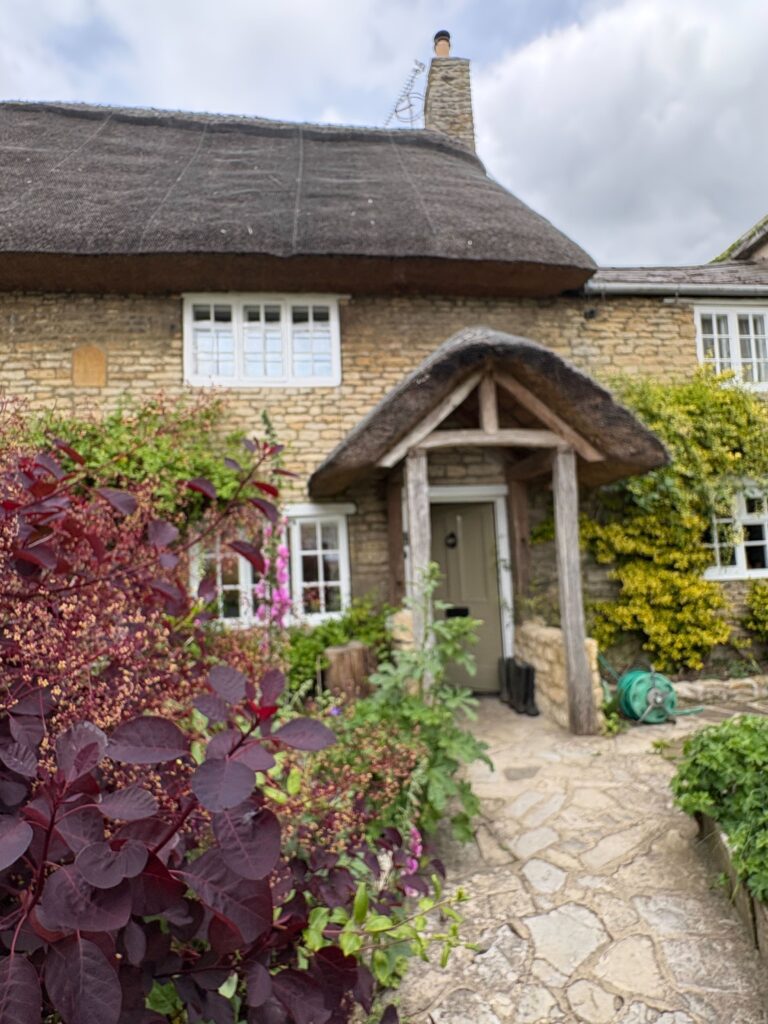
I recently visited Julia Shay and Martin Groves, who have lived in their 18th-century thatched cottage in Eynsham for about twelve years. The house is Grade II listed and sits in a conservation area, which has shaped almost every decision they make about improving it.
The windows were one of the biggest projects to undertake. The original single-glazed casements are draughty and, in some cases, still contain 18th-century glass that looks lovely, but is wavy, thin, and offers almost no insulation at all. Every winter morning, Martin would spend 15 minutes going around the small panes mopping up condensation. Noise was also an issue, particularly in the bedrooms, which sit above the road where lorries unload in the early hours.
Replacing the windows with double glazing was not an option. As a listed building in a conservation area, the original frames are protected. So Julia and Martin began looking into secondary glazing instead.
A long road to the right solution
Julia spent a considerable amount of time researching what might be possible. They had one failed attempt with a heritage glazing company that took a deposit, agreed to help with the listed building consent process, and then did very little when the application was turned down. They also had an approach from a company selling magnetic-fit panels, which quoted £13,000 and would have required removing the whole panel every time a window needed opening.
The journey towards a solution came from wathcing the video of a Cosy Homes Oxfordshire case study about a barn conversion where the owners had installed internal casement windows fitted inside the existing frames, without altering them at all. They contacted the Cosy Homes Oxfordshire team to find out who had done the work. The joiner turned out to be based in North Oxfordshire but was no longer available.
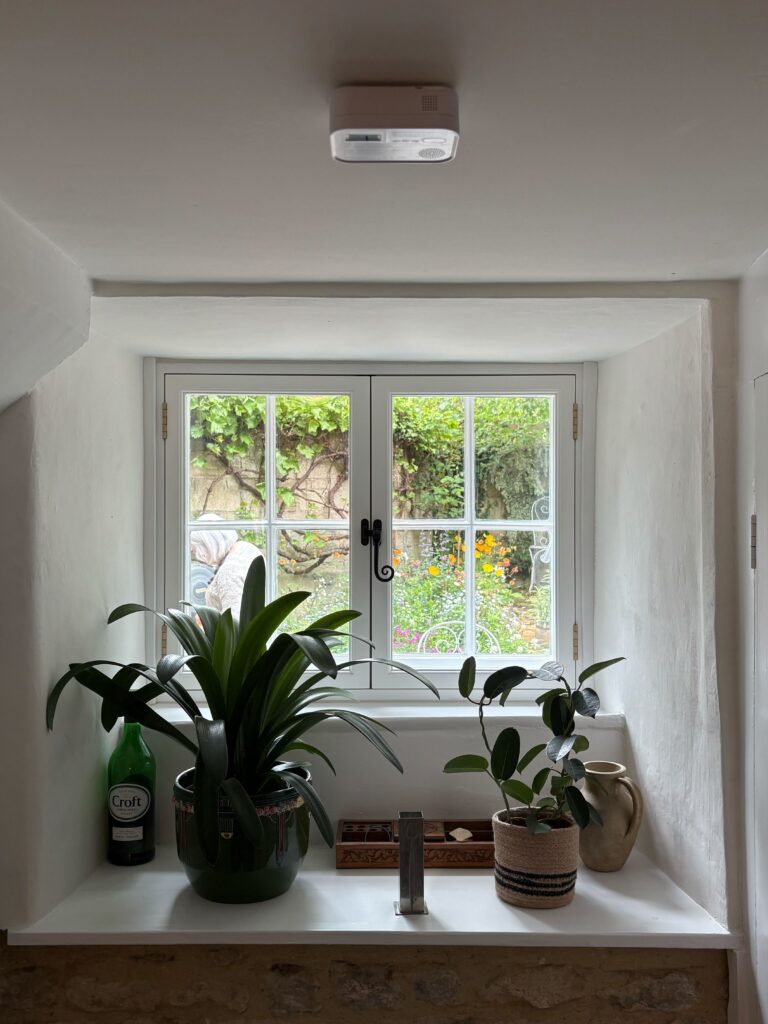
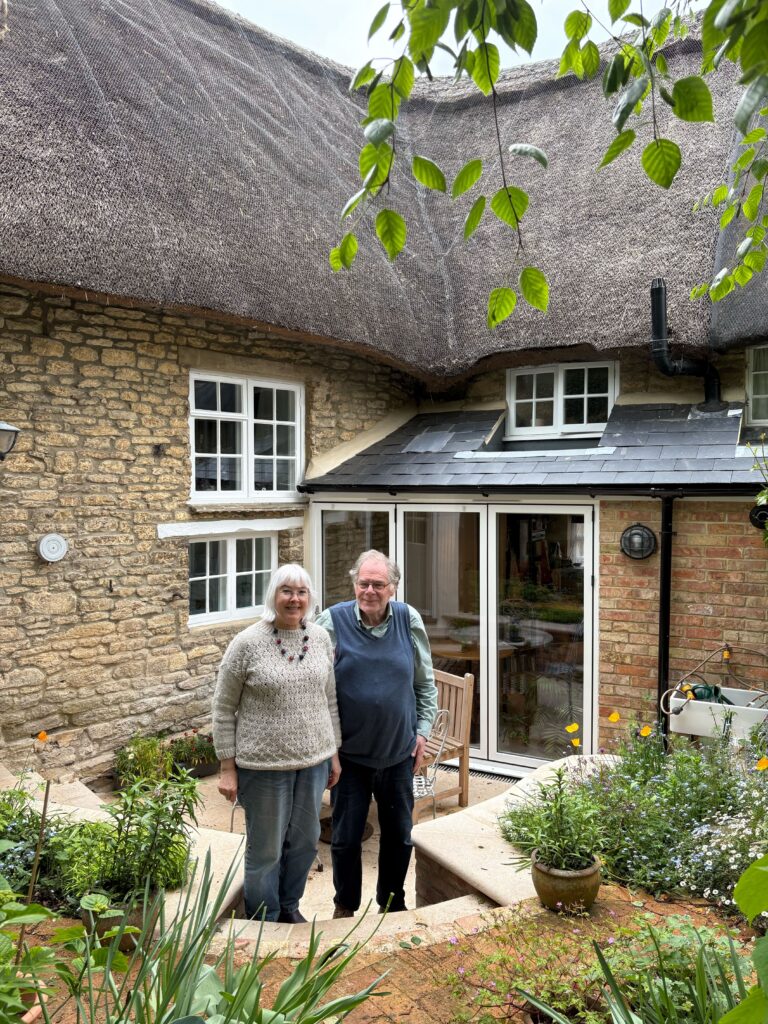
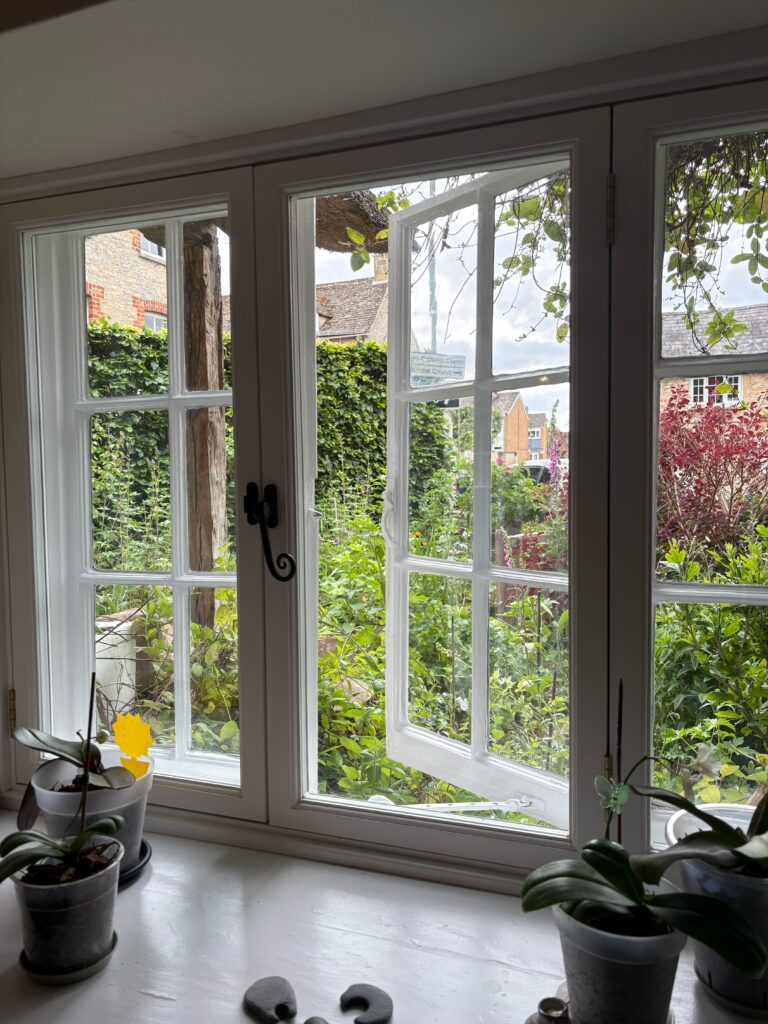
Julia and Martin then began looking for a local joiner who would have the skills to undertake their project and make sympathetic internal casements following the example they had seen in the Cosy Homes case study video. A friend in
the village was able to recommend a craftsman joiner and furniture manufacturer who had undertaken bespoke work for them over a long period of time. He came out and looked at every window himself before quoting. Nothing in the cottage is square, so each frame had to be measured and made individually. He suggested starting with a pilot in the guest bedroom to see how it worked before committing to the whole house. The pilot went well, and they went ahead with all the windows.
His specification was softwood frames with draught-proofing around the openings, fitted with 24mm A-rated double-glazed units, spray-finished white on site. The bedrooms got a higher acoustic specification to help with noise. The glazing bars in the new frames were designed to line up with the originals, so from inside or outside you do not immediately notice the secondary layer is there at all.
The total cost came to around £10,000 for the whole house.
What changed
The condensation on the old windows is much reduced, even in the winter. Martin no longer spends his mornings mopping windows. The dehumidifier they used to run regularly in the main rooms now lives in the utility room and is mostly used for drying laundry.
“Condensation is no longer a problem for us,” Julia says. “And we’re not unduly worried about damp.”
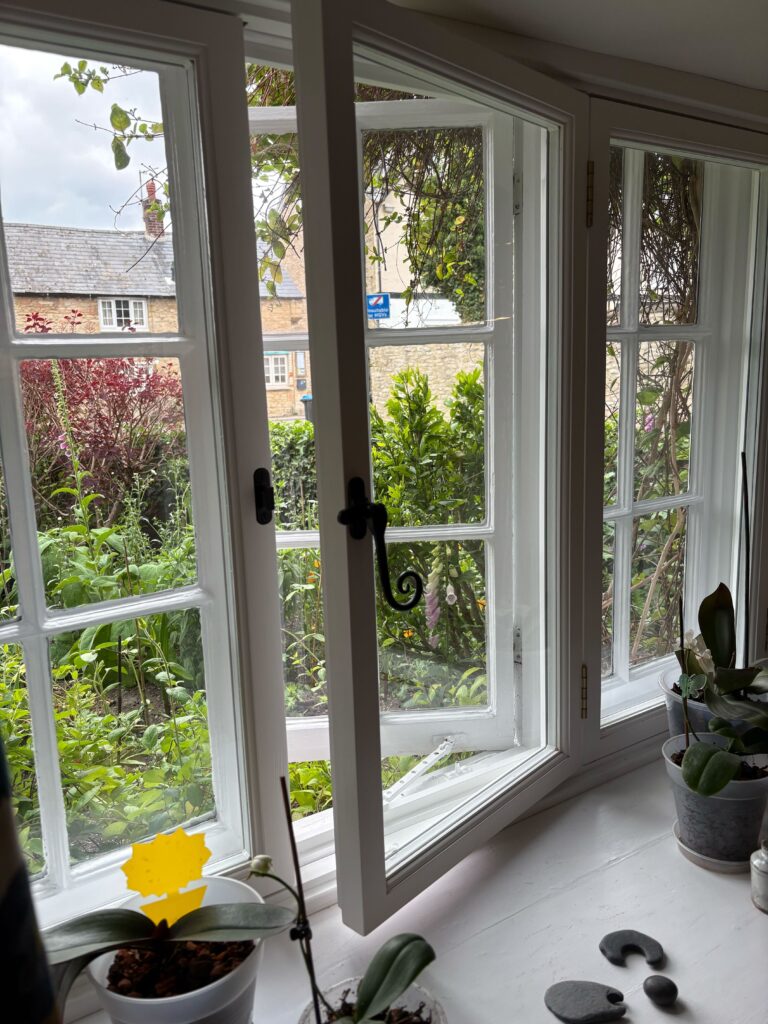
The noise in the bedroom is noticeably reduced. The house is warmer and maintains a more stable temperature, and because the secondary frames open independently, the windows still function normally.
Martin is clear-eyed about the financial side: “We’ll never see that money back in terms of savings on heat. But we’re well pleased.”
The solution Julia and Martin have found is a really neat one – I think it looks fantastic, clearly works well, and was actually cheaper than replacing the older, existing windows. It also keeps a small part of the history of the village alive, which is a great added bonus.
What they could not do
Like many owners of older listed properties, Julia and Martin have run into the limits of what is physically and legally possible when it comes to reducing their home’s carbon footprint. They did look seriously at heat pumps, but ground source was ruled out by the size of the garden. An electric boiler and/or free standing electric radiators that could run off green electricity was the option Martin would have preferred, but current pricing regime which links the cost of electricity to fossil fuel made that option unaffordable. The house has microbore pipework and stone floors, which made a heat pump impractical, neither were solar panels an option given the listing and the thatch. When their gas boiler failed, replacing it with another gas boiler was the only realistic path.
“In terms of heat source, we’ve been a bit stuck,” Martin says. “Julia has probably spent hundreds of hours thinking about environmentally sensitive options for this house, all of which have drawn a blank, with the exception of insulation and the windows.”
The secondary glazing did not come from a single-minded focus on carbon reduction. It came from heat loss issues associated with antique windows in a listed building, a daily condensation problem, noise, and the practical reality of living in a very old building set within a conservation area. For others living in the area, Julia and Martin’s project is a great example of where improving energy efficiency has many other benefits.
Julia and Martin’s home sits within the CAPZero area, where the Low Carbon Hub is working with communities across West Oxfordshire to understand how the area might move toward a zero-carbon local energy system.