
Join our thermal imaging training workshop
Author
 Cathy Ryan
Publication date 18 December 2025
Our next thermal imaging training workshop for Low Carbon Hub and CAG Network community groups has a new date and takes place on:
Wednesday 14 January 2026, 6.30pm – 8.30pm, at the John Wesley Room, Wesley Memorial Church, New Inn Hall Street, Oxford OX1 2DH.
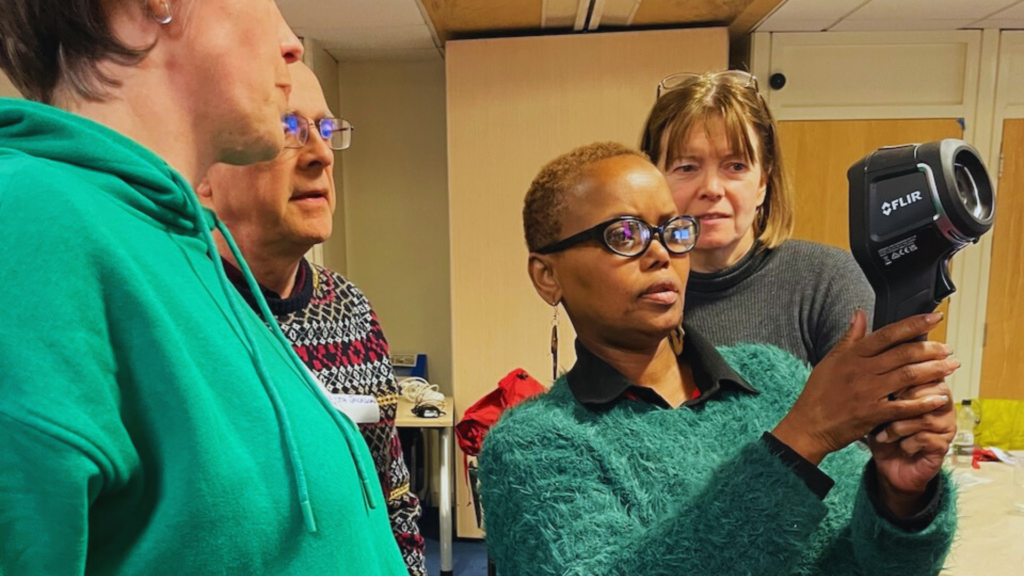
Our thermal imaging training workshop, led by Paul Buckingham, offers community groups the chance to learn how to feel confident using a thermal imaging camera to help householders identify areas of heat loss in their homes and buildings.
Paul is the perfect person to lead the workshops for community groups, combining expert knowledge with a practical approach, in an inclusive and supportive atmosphere.
This practical session will also provide the opportunity for hands-on experience, and we will be taking thermal images of nearby buildings, to spot heat loss. We will also be able to see how an airtightness test works alongside thermal imaging.
As the weather gets colder it can be difficult to heat our homes to a comfortable and affordable level. The energy price cap is due to rise in January, making it increasingly important to help residents spot where there are gaps in their home’s thermal envelope.
A thermal imaging project is a fantastic way of engaging householders in home energy efficiency by identifying where heat is being lost from their homes. From new builds to listed buildings, residents can see visual evidence of poorly insulated areas that let in cold air and draughts. This can often be the catalyst to motivate residents to take the first steps towards making their homes warmer and lowering their heating bills.
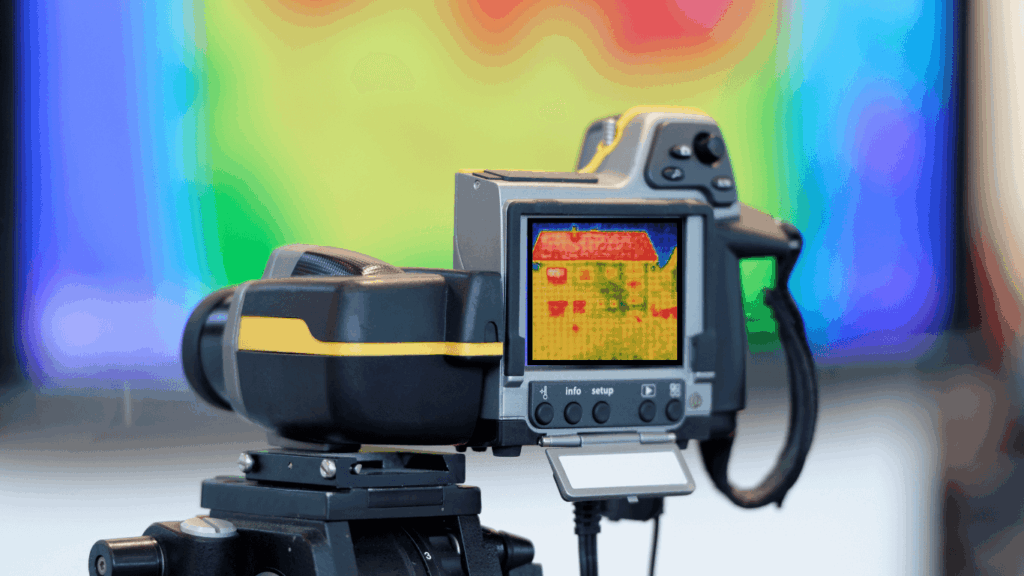
Thermal imaging cameras can highlight where there might be insufficient loft insulation and uneven cavity wall insulation, gaps in floorboards, draughts around windows and badly fitted loft hatches, all allowing heat to escape, which means we increase the amount of fuel we use to try to keep our homes warm.
The cameras can also be used for measuring heat loss in a business or community building, such as a village hall or place of worship. Low Carbon Hub has a helpful resource, the Community Building Checklist which can be found here on our website.
Thermal cameras are frequently used by Energy Solutions Oxfordshire, our programme that provides support and funding for businesses to help install energy efficient measures in their buildings and premises. Find out more here if you know of a business in your community that might benefit from the service.
Low Carbon Hub has two thermal imaging cameras that can be borrowed by our community groups, free of charge.
How thermal imaging cameras work
Thermal imaging cameras work by creating a digital image of a home based on the temperature of objects such as walls, windows, doors, and roof surfaces within its view. The camera produces a heat map, where different colours represent a range of different temperatures. Warmer objects appear as red or yellow, while cooler objects appear as blue or purple, enabling you to see where heat is leaking from, and cold air is entering your home.
The right conditions can really help your thermal image campaign go well:
- The ideal time for thermal imaging is a cold, dry night, usually between December and March, with no rainfall and no strong wind.
- The temperature difference between inside and outside is important and ideally should be a minimum of 10c – 15c.
- It’s helpful if residents have their central heating system on for at least 2 hours before the thermal image, so that they have an average inside temperature of at least 18°C.
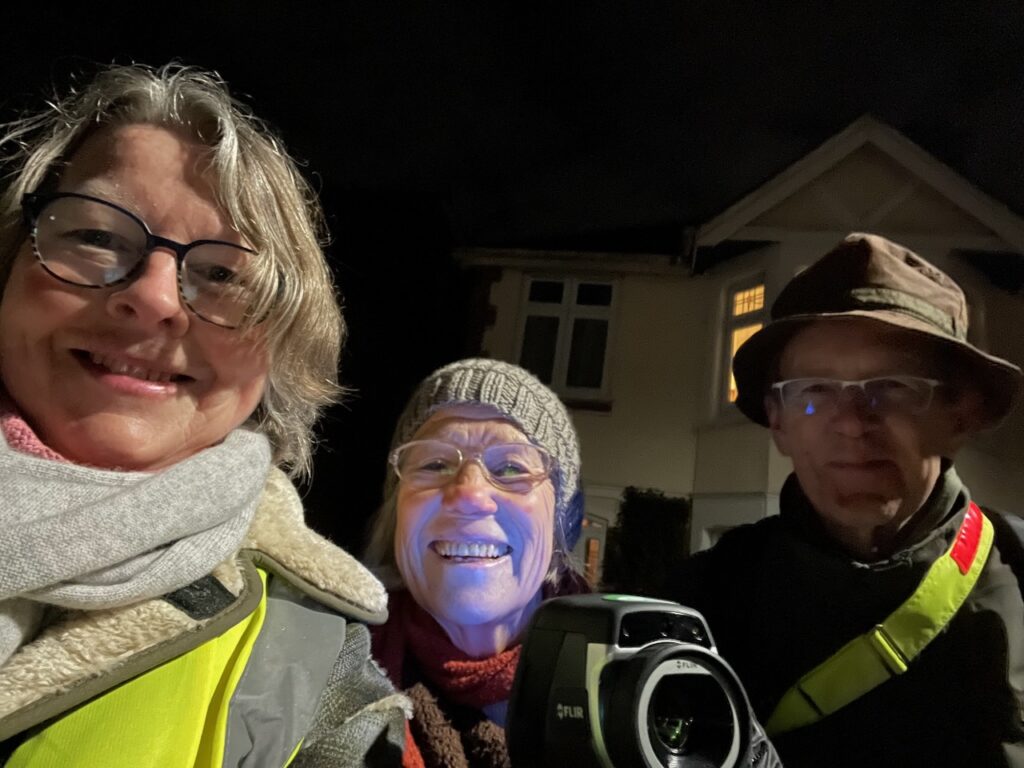
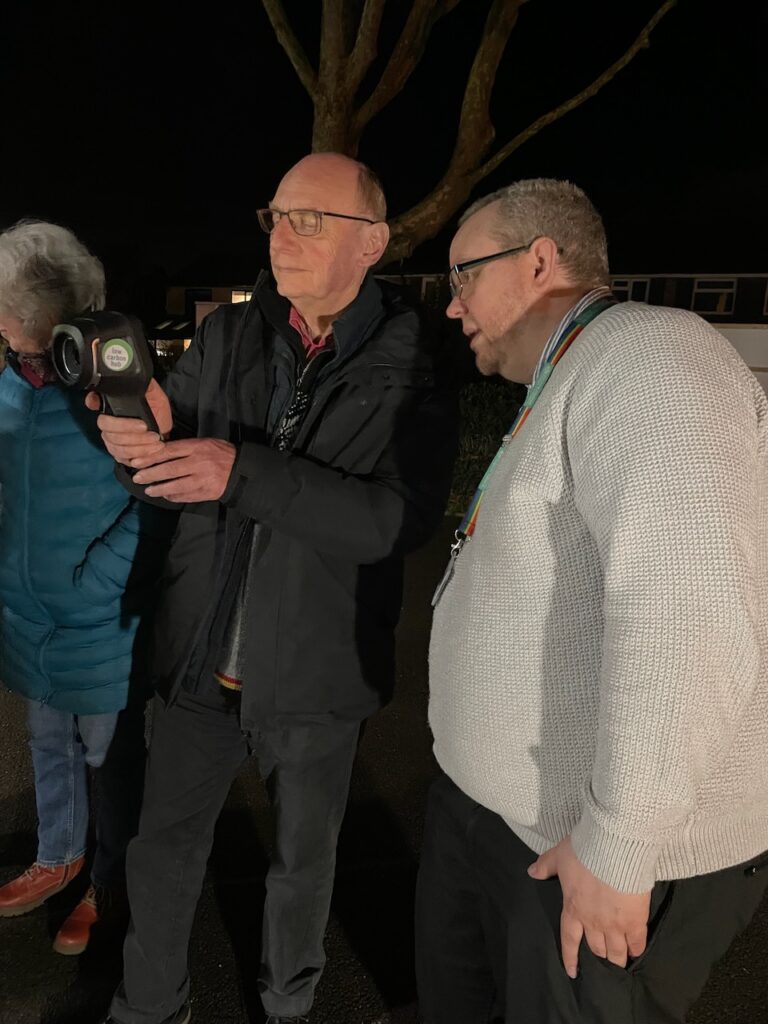
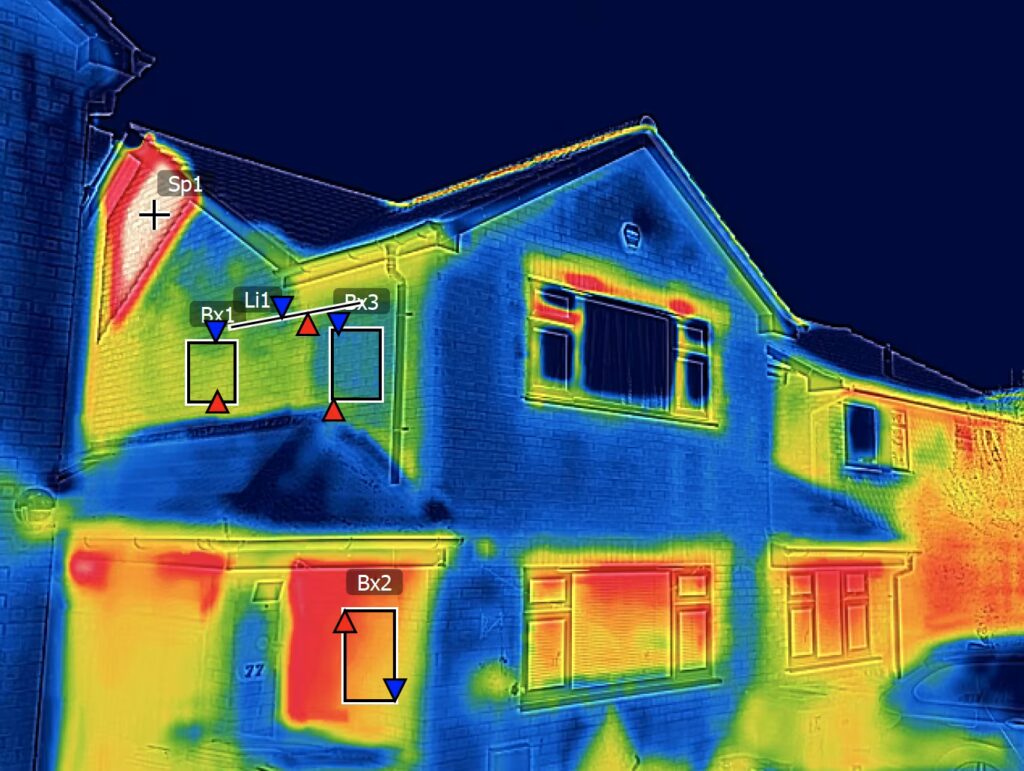
It is important to let residents know that their privacy is safe during the thermal imaging session, as infra-red radiation cannot pass through glass and the camera cannot see through the windows, doors, or walls. When a thermal camera is pointed at a window, only a reflected temperature of the objects can be seen, rather than seeing through it.
The thermal image interpretations can be used as a basis to provide residents with advice on how they might make their home warmer, save money on their energy bills, and reduce their carbon emissions.
Low Carbon Hub are developing a thermal imaging marketing pack for community groups to help recruit households to sign up. We are also working on a leaflet for residents that outlines the options and next steps they could take to make their homes more energy efficient. We hope to have these resources available at the training workshop on 14 January.
Click here to download the excellent CAG Network’s Guide to Thermal Imaging.
Oxfordshire County Council’s Retrofit Lead, Dale Hoyland’s Quick Guide to Interpreting Thermal Images can be found here.
We’re delighted that eight of our community groups are preparing thermal image campaigns this Winter. We look forward to seeing you at the training workshop, 14 January 2026!